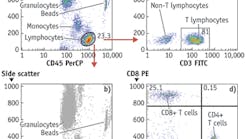
Recent advances in optics and electronics could make cytometric technology highly affordable and broadly applicable within the next few years, filling new niches and challenging...
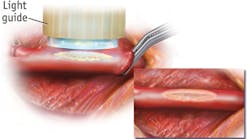
A $1.7 million grant from the National Institutes of Health's National Heart, Lung and Blood Institute is helping researchers optimize optical coherence tomography (OCT) to improve...
A new lab test at Children's Hospital of Philadelphia (PA; CHOP) uses next-generation sequencing (MiSeq from Illumina; San Diego, CA) in an effort to improve transplant outcomes...
A test that uses Blu-ray technology to detect Salmonella, toxic substances, allergens, and cancer biomarkers could help under-resourced installations access capabilities currently...
A fiber laser able to produce 25 times more light than other lasers operating at a similar wavelength has proven able to detect very low concentrations of gases.
March 18, 2014
(Image courtesy of the Thayer School of Engineering/Dartmouth College)
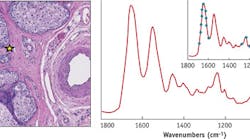
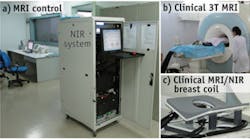
A new approach that combines magnetic resonance imaging (MRI) with near-infrared (NIR) spectroscopy could spare women with suspicious mammogram results from invasive biopsies ...
Ultrathin "nanosheets" -- indium selenide (In2Se3)-based material made of highly efficient nano-sized light detectors -- could provide a huge benefit to low-light biomedical imaging...
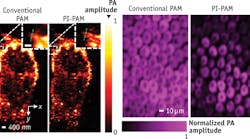
Researchers at Washington University in St. Louis (MO) have turned a significant drawback of laser microscopy -- photobleaching -- into an equally significant advantage.
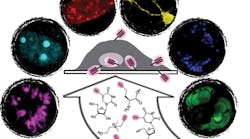
The ability to visualize small biomolecules inside living biological systems with minimal disturbance has been a goal in the scientific community for years.
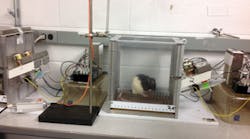
Low-frequency light activation of dopamine (DA) neurons reduces a drinking binge by 54% and significantly delays the start of drinking. These are the findings of research on rats...
Again and again at SPIE Photonics West 2014 (February 1-6), I found evidence of the importance of life sciences applications among optics and photonics suppliers and systems developers...
The Biomedical Optics Symposium (BiOS) and BiOS Expo, the world's largest annual biomedical optics and biophotonics symposium and exhibition, kicked off SPIE’s Photonics West ...