• Home >
  • Back Issues >
  • Laser Focus World >
  • Volume 57, Issue 12
  • Volume 57, Issue 12

    More content from Volume 57, Issue 12

    FIGURE 1. The final result of Leonardo da Vinci’s “Tiny Landscape” after different stages of cleaning are shown in the side sequence (Milan, Castello Sforzesco, Sala delle Asse, southwest wall; courtesy of the Municipality of Milan/Ranzani 2015 and 2019).
    Laser cleaning is a technology increasingly used for a variety of applications, including welding pre- and post-treatments, coating removal, and decontamination.
    Dec. 18, 2021
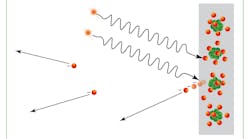
    FIGURE 1. The photoelectric effect in a solid.
    A century of scientific advances is enabling some of the future’s most exciting technologies, including those enabling quantum communications and other applications that are continuing...
    Dec. 17, 2021
    (Courtesy of National Renewable Energy Laboratory)
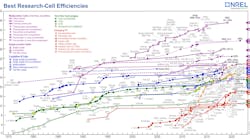
    FIGURE 1. NREL Best Efficiencies of Research Photovoltaic Cells, as compiled in 2021.
    Solar cells containing a tandem pair of photovoltaic junctions with different bandgaps can boost efficiency to help meet goals for clean green electricity.
    Dec. 16, 2021
    Reprinted from Reference 4, with publisher’s permission
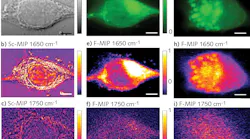
    FIGURE 3. Images of living MiaPaca2 cancer cells: Scattering image (a); O-PTIR image at 1650 cm-1 (b); O-PTIR image at 1750 cm-1 (c); fluorescence image stained with Nile red and excited at 532 nm (d); F-PTIR image at 1650 cm-1 (e); F-PTIR image at 1750 cm-1 (f); fluorescence image stained with Rhodamine 123 (Rho123) and excited at 488 nm (g); F-PTIR image at 1650 cm-1 (h); and F-PTIR image at 1750 cm-1 (i).
    A brand-new technique—fluorescence-detected mid-infrared photothermal microscopy (F-PTIR)—combines the resolution and sensitivity of fluorescence microscopy with the specificity...
    Dec. 15, 2021
    FIGURE 1. Surface-mount optics (SMOs) on an LED circuit board.
    Surface-mount optics (SMOs) are emerging as a viable, lower-cost component option in optical assemblies, as they are solder-ready and designed to populate onto a PCB alongside...
    Dec. 14, 2021
    Gerd Altmann/Pixabay
    Covid 19 5205245 1920
    The shape of the world’s economies, the opportunities for photonics-related businesses, and how some photonics industry leaders are prospering in these times are the focus of ...
    Dec. 6, 2021
    Courtesy of Yoichi Murakami, Tokyo Institute of Technology
    The sensitizer molecules (green) absorb low energy photons (long-wavelength light) and become excited into triplet states. These triplet states are then transferred to nearby annihilator molecules (blue), which then pass them around throughout the crystalline array of the annihilator. If two traveling triplet states meet at a single annihilator molecule, the combined excess energy produces a higher energy photon (shorter wavelength light).
    Solid-solution organic crystals could lead to less light waste, ultimately enhancing technologies such as solar cells.
    Dec. 2, 2021
    Photo 194426267 / 2021 © Nataliia Mysik | Dreamstime.com

    Dreamstime Xl 194426267
    In 2021, advances in optics and photonics encompass the fields of laser optics, integrated photonics, quantum optical systems, and much more.
    Dec. 1, 2021
    Courtesy of Virginia Tech
    Miniature fiber device developed in Virginia Tech's College of Engineering could make cancer immunotherapy more effective.
    The technology—a miniaturized implantable device that employs electrode-embedded optical fibers—offers local delivery of medication as well as measurement of tumor impedance and...
    Nov. 24, 2021
    Courtesy of Lev Lab, Stanford University
    Illustration of a system that produces the first optical lattice with sound. Light is pumped in through three sources—including through a digital mirror device (DMD)—and produces a super-solid of atoms (orange) that can vibrate.
    The new device is an optical lattice of atoms that incorporates sound quanta (phonons)—a first of its kind.
    Nov. 23, 2021
    Courtesy of Jinyang Liang, INRS
    Lifetime images of green (top row) and red (bottom row) upconversion emission bands under different temperatures, captured by SPLIT technology.
    The new imaging technique is based on the luminescence of nanoparticles doped with rare-earth ions.
    Nov. 22, 2021
    Harvard SEAS
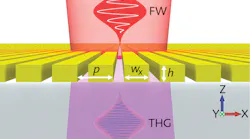
    Using a silicon nanopillar coating, researchers have discovered a way to overcome the limitations of chromatic dispersion in ultrafast laser pulses.
    Using a simple nanopillar coating, researchers have discovered a way to overcome a problem with ultrashort laser pulses that has plagued researchers for years.
    Nov. 19, 2021
    Courtesy of University of Oldenburg/AG Quantum Materials
    Crystals made of three atomic layers placed between suitable mirrors can be made to emit laser light at room temperature.
    Laser light can now be emitted above cryogenic temperatures from 2D laser materials, raising hope for the future of novel lasers, miniaturized circuits, and future quantum applications...
    Nov. 18, 2021
    Courtesy of A. Pacheco, TNI
    Lung phantom lab bench setup with capillary array and GASMAS probes.
    Development of a new lung phantom, and the outcomes it has produced, is pushing biomedical researchers toward more effective diagnostics and treatment of respiratory issues.
    Nov. 17, 2021
    Melpomenem | Dreamstime.com
    Photo 141431340 © Melpomenem | Dreamstime com
    Working together, LiFi and RF backscatter shows promise for battery-free communication.
    Nov. 16, 2021
    An optical trap can serve as a “virtual capillary,” forcing a red blood cell to bend, then allowing it to recover its shape after the trap is removed.
    An international, multidisciplinary team has measured red blood cell (RBC) mechanical properties using both optical tweezers and digital holographic microscopy (DHM).
    Nov. 15, 2021
    Photo 177919414 © Arissuu1 | Dreamstime.com
    Dreamstime Xl 177919414
    A new technique could help pathologists to quickly and more effectively identify cancer cells, bringing disease detection to the next level.
    Nov. 11, 2021
    Giant Magellan Telescope
    Giant Magellan Telescope Interior Front
    Optics industry is playing a pivotal role enabling scientists to develop the next generation of telescopes.
    Nov. 4, 2021
    Courtesy of Duke University
    2112 Lfw 07 09 Nb
    Changing the physical shape of chalcogenide glasses can expand their use in the visible and UV ranges, leading to applications including environmental monitoring, biological imaging...
    Nov. 1, 2021