Facial recognition continues to be challenging, but is advancing in large part because of specialized software algorithms that take clues from the surrounding environment for ...
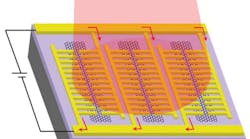
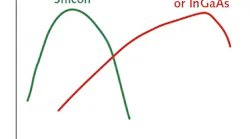
Conventional semiconductor photodiode materials (silicon, indium gallium arsenide, mercury cadmium telluride, and so on), while extremely useful in photonics, have sensitivities...
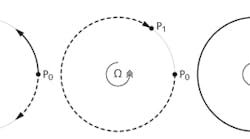
Optical isolators—components that transmit light in only one direction and block it in another—are crucial for protecting laser sources from back reflections and/or routing or...
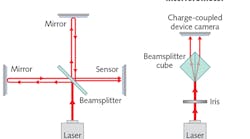
Using an interferometer to characterize the spatial information of a continuous-wave (CW) laser beam can be done straightforwardly using a shearing interferometer, where the test...
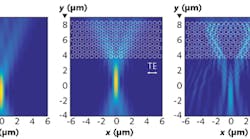
It is widely believed that photonic crystals demonstrate transparency (the ability to transmit light without scattering or diffraction) only when the considered wavelength is ...
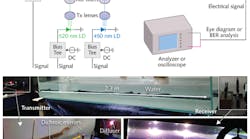
To date, underwater optical communications using blue or blue-green lasers or LEDs are considered optimal to achieve high bandwidth and high data transmission rate.
Congressional negotiations over the FY2019 budget look promising for bio-optics technologies that stretch the edges of discovery for personalized medicine, neuroscience, biosensing...
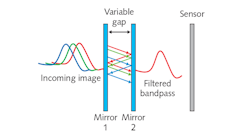
Light is an invaluable tool for very diverse applications, but none more so than sensing. And sensing with multiple wavelengths takes many forms—for example, tunable diode laser...
Spectral unmixing and other image processing techniques applied to hyperspectral data reveal subtle color and texture differences not seen in standard microscopy images, improving...
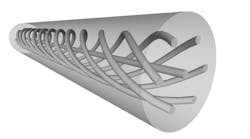
Leading-edge manufacturing processes have enabled the production of optical fibers robust and flexible enough to address an exciting new range of biomedical applications.