Global coverage of photonics technologies, applications, and innovations
Lasers/Sources
Optics
Quantum
Test/Measurement
Buyers' Guide
Sections
Lasers/Sources
Optics
Quantum
Test/Measurement
Buyers' Guide
Laser Processing
Bio & Life Sciences
Detectors/Imaging
Executive Forum
Special
Innovators Awards
Issue Archive
Newsletter Archive
Webinars
White Papers
Events
Videos
Podcast
Contact
Contact Us
Get Published
Advertise
Subscribe Now!
Affiliated Brands
DATA CENTER FRONTIER
LIGHTWAVE
VISION SYSTEMS DESIGN
ELECTRONIC DESIGN
Follow us on
https://www.facebook.com/pages/Laser-Focus-World/126899915297
https://www.instagram.com/laser.focus.world
https://www.linkedin.com/showcase/laser-focus-world
https://youtube.com/laserfocusworld
Home
>
Back Issues
>
Laser Focus World
>
Volume 53, Issue 08
Volume 53, Issue 08
Volume 53, Issue 08
Subscribe
Digital
Edition
Archives
Lasers & Sources
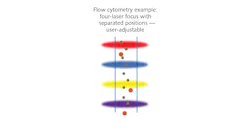
Visible Semiconductor Lasers: Standardized multilaser modules enable comprehensive data sets in life sciences
Aug. 11, 2017
Fiber Optics
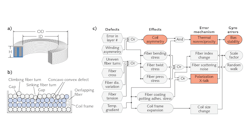
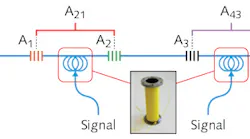
Fiber-optic Sensing: Transforming FOG coil manufacture from an art to a science
Aug. 11, 2017
Optics
Photonics Applied: IR Optics Manufacturing: Laser-assisted μ-LAM process cuts through infrared optics
Aug. 11, 2017
Lasers & Sources
LASER World of PHOTONICS Review: What was new at the LASER trade fair?
Aug. 11, 2017
(Courtesy of Hari Shroff, National Institute of Biomedical Imaging and Bioengineering)
Research
Advanced Microscopy: Adaptive optics open a new frontier of in vivo subcellular imaging
Aug. 11, 2017
More content from Volume 53, Issue 08
Optics
IR Imaging: Spherical mirror enables internal stray-radiation measurements of cryogenic infrared imaging systems
An approach to experimentally measure internal stray radiation of cryogenic IR imaging systems uses only a spherical mirror.
Aug. 11, 2017
(Courtesy of Technion – Israel Institute of Technology)
Detectors & Imaging
Computational Imaging: Computational imaging and the AC grid manipulates artificially lit scenes
The alternating-current-enabled camera can be used internationally under 110V or 220V standard lighting conditions.
Aug. 11, 2017
(Courtesy of the University of Texas, Austin/Milner group)
Lasers & Sources
Fiber Lasers: 2 μm thulium fiber laser offers precision surgery promise
Thulium-doped fiber lasers are of increasing interest for life science applications for two key reasons.
Aug. 11, 2017
(Courtesy of Art Photonics)
Lasers & Sources
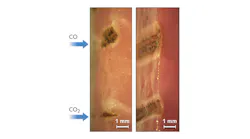
Medical Lasers: Carbon monoxide laser shows surgical potential
Carbon monoxide (CO) and carbon dioxide (CO2) lasers are somewhat similar mid-infrared sources with very different histories.
Aug. 11, 2017
Research
Near-IR Optical Imaging: Shortwave-infrared particles and camera combine for breakthrough in vivo imaging
The particles provide a dramatically higher emission quantum yield, and can be easily modified for various functional-imaging applications.
Aug. 11, 2017
(Courtesy of Nanjing University)
Lasers & Sources
Tunable Lasers: Carbon enables record wavelength tuning for 2 μm ultrafast lasers
Researchers are using carbon-based nanomaterials to enable record tuning range from compact and low-cost 2-micron laser oscillators.
Aug. 11, 2017
Lasers & Sources
Business Forum: Photonics entrepreneurship meets demand for autonomous vehicle lidar
This month, I interviewed Dr. Jason Eichenholz, CTO and co-founder of Luminar Technologies.
Aug. 11, 2017
Lasers & Sources
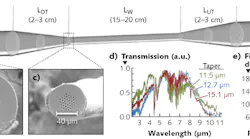
Tapered chalcogenide optical fibers improve supercontinuum performance
Supercontinuum generation from 1 to 11.5 μm from a tapered chalcogenide photonic-crystal fiber has been demonstrated.
Aug. 9, 2017
Lasers & Sources
Femtosecond optical vortices are close to perfect
Researchers have completely bypassed the problems created by the use of dispersive optics to create femtosecond optical vortices.
Aug. 9, 2017
Optics
Graphene-based Wi-Fi antenna for windows is optically transparent
An optically transparent half-wavelength microwave antenna made by layering monolayer graphene onto glass has been created.
Aug. 9, 2017
Fiber Optics
FBG-based interferometer senses the tiniest of acoustic signals
A different type of fiber Bragg grating (FBG)-based sensor has 1000X more sensitivity than standard FBG sensors.
Aug. 9, 2017
Lasers & Sources
Silicon-resonator-stabilized lasers have linewidths of only 0.01 Hz
Two independent lasers, each with their own silicon Fabry-Perot cavities and with laser linewidths of just 0.01 Hz, have been created.
Aug. 9, 2017
Lasers & Sources
Photonics in its bio-manifestation
Photonics applications in the life sciences have long been some of the most compelling and exciting uses of the technology.
Aug. 9, 2017