Global coverage of photonics technologies, applications, and innovations
Lasers/Sources
Optics
Quantum
Test/Measurement
Buyers' Guide
Sections
Lasers/Sources
Optics
Quantum
Test/Measurement
Buyers' Guide
Laser Processing
Bio & Life Sciences
Detectors/Imaging
Executive Forum
Special
Innovators Awards
Issue Archive
Newsletter Archive
Webinars
White Papers
Events
Videos
Podcast
Contact
Contact Us
Get Published
Advertise
Subscribe Now!
Affiliated Brands
DATA CENTER FRONTIER
LIGHTWAVE
VISION SYSTEMS DESIGN
ELECTRONIC DESIGN
Follow us on
https://www.facebook.com/pages/Laser-Focus-World/126899915297
https://www.instagram.com/laser.focus.world
https://www.linkedin.com/showcase/laser-focus-world
https://youtube.com/laserfocusworld
Home
>
Back Issues
>
Laser Focus World
>
Volume 52, Issue 08
Volume 52, Issue 08
Volume 52, Issue 08
Subscribe
Digital
Edition
Archives
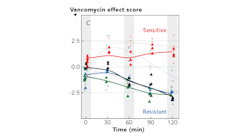
(Adapted from U. C. Schröder et al. [3])
Spectroscopy
Spectroscopy: Raman spectroscopy advances for biomedical applications
Aug. 11, 2016
(Courtesy of the National Photonics Initiative)
Software
Biophotonics: Photonics is key for Cancer Moonshot
Aug. 11, 2016
Optics
Business Forum: How Brexit impacts photonics
Aug. 11, 2016
Lasers & Sources
Industrial Lasers: Beam shaping enables new ultrafast laser manufacturing applications
Aug. 11, 2016
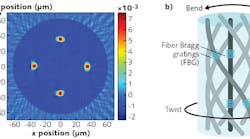
(Courtesy of Interfiber Analysis)
Fiber Optics
Fiber Sensing: Medical fiber-optic sensors offer haptics, 3D shape sensing, and pressure sensing
Aug. 11, 2016
More content from Volume 52, Issue 08
(Courtesy of Becton Dickinson)
Lasers & Sources
Market Insights: Fifty years of the laser - A Coherent view
This year is Coherent's 50th anniversary and, in many ways, the company's history and success mirror such trends in the laser industry.
Aug. 10, 2016
(Courtesy of University College Cork)
Detectors & Imaging
CMOS Cameras: CAOS-CMOS camera has 1000X better dynamic range
A CAOS-CMOS camera has a three-orders-of-magnitude improvement in dynamic range when compared to conventional CMOS.
Aug. 10, 2016
(Courtesy of the Bao Lab, University of Houston)
Optics
Integrated Photonics: 2D dichalcogenides promise efficient electronic-photonic integrated circuits
A single material platform is desirable for monolithic integration of photonic and electronic circuits.
Aug. 10, 2016
(Courtesy of J. Kim et al./Applied Physics Letters)
Detectors & Imaging
Wearable Photonics: 1-μm-thick GaAs photovoltaic cells have a 1.4 mm bending radius
Scientists have made ultrathin 1-μm-thick gallium arsenide (GaAs) photovoltaic cells flexible enough to wrap around a pencil.
Aug. 10, 2016
Lasers & Sources
Femtosecond lasers combine additive and subtractive manufacturing
New additive manufacturing instruments use femtosecond pulsed lasers to create 3D objects from high-temperature materials.
Aug. 10, 2016
Lasers & Sources
Perovskite laser array has high uniformity and density
Researchers have fabricated perovskite-based nanolaser arrays with 0.15 nm standard deviation in lasing wavelength.
Aug. 10, 2016
Fiber Optics
Single-mode telluride glass fiber aims for exoplanet-hunting interferometry
One way to detect exoplanets is to use nulling interferometry to combine light from several telescopes that all have relative phase shifts.
Aug. 10, 2016
Detectors & Imaging
EMCCDs enable a speckle imaging resurgence
Speckle imaging has been applied to astronomical imaging and blood-flow mapping, for example, since the early 1960s.
Aug. 10, 2016
Fiber Optics
Aperiodic lensless imaging endoscope fiber reduces side lobes
Lensless imaging endoscopes based on multicore optical fibers can reach deep into tissue to image in a minimally invasive way.
Aug. 10, 2016
(Courtesy of KMLabs)
Lasers & Sources
Future Optics: Ultrafast optics and photonics open up new discoveries - Interview with Margaret Murnane
High-harmonic sources have very high temporal and spatial coherence, so they can achieve very high temporal and spatial resolution.
Aug. 10, 2016
Lasers & Sources
Advancing at an ultrafast pace
Each issue of this magazine and online, we seem to cover ever-more news about advances in ultrafast science and technology.
Aug. 10, 2016