693895c2481e7642f737ad11 Comsollogo130x20

COMSOL

100 District Ave
Burlington, MA 01803
United States
781-272-3322

More Info on COMSOL

693895c2481e7642f737ad11 Comsollogo130x20

COMSOL Multiphysics is a simulation software for modeling any physics-based system. A strength is its ability to account for multiphysics phenomena.

Products

Courtesy of COMSOL
Wave Optics Module
Analyze Micro- and Nano-Optical Devices The Wave Optics Module, an add-on to the COMSOL Multiphysics® software platform, is used by engineers and scientists to understand,...

Videos

'The Multiphysics Roadmap' Panel w/ NVIDIA, Stanford, and MathWorks | COMSOL Simulation Summit
Hear thought leaders from NVIDIA, Stanford University, MathWorks, and DE 24/7 share insights into the future of multiphysics simulation through the unique lenses of their respective...
Comsolv1
Laser Focus World Senior Editor John Wallace interviews COMSOL technical product manager Christopher Boucher, discussing special topics in the area of optical simulation in detail...
Christoper Boucher Introduces COMSOL
Laser Focus World Senior Editor John Wallace interviews COMSOL technical product manager Christopher Boucher broadly introducing the concept of simulation, what its purpose is...

Articles

FIGURE 1. The metal-dielectric interface in a plane at y = 0. This system supports SPPs propagating in the x direction and exponentially decaying in the y direction.
The hunt is on for better plasmonic designs, and optical simulation software will play an important role.
(Image made using COMSOL Multiphysics® software and provided courtesy of COMSOL)
Comsol
Multiphysics version 6.1 modeling and simulation software provides direct modeling operations to allow parametric sweeps of imported CAD models with optimization.
FIGURE 1. At the end of the fiber, the output field is no longer the same as the input field. To absorb the outgoing wave, a general absorbing artificial material is used (aka a perfectly matched layer).
Full-wave multiphysics simulations for optical fibers require sophisticated modeling and simulation techniques.
Comsol
The Multiphysics software version 6.0 update includes a Model Manager server with an asset management system.
FIGURE 1. Scattering of light by a gold nanoparticle embedded in a substrate. The finite element mesh is also shown.
Simulation is used for design, optimization, and diagnostics in diverse applications including optical fibers, lasers, smartphones, and autonomous vehicles. However, optical simulation...
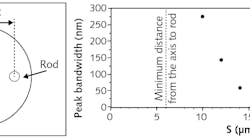
In a single-mode optical fiber with a 10-μm-diameter core, a high-refractive-index rod is placed a distance S away in the cladding; the rod itself supports a mode, in addition to the mode supported by the core (a). The idea is for the rod to couple resonantly to the core, drawing light in certain spectral regions away from the core and absorbing it, thus serving as a spectral filter. The width of the peak bandwidth narrowed as the rod was moved farther from the core (b).
A single-mode silica fiber has a high-refractive-index rod placed in the cladding that resonates with the core, absorbing light at certain wavelengths.
2101 Lfw Nb 2
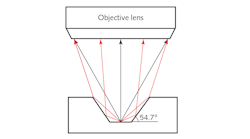
Adding a four-sided etched microreflector to a SERS chip results in higher intensity at the surface and a higher signal-collection efficiency.
(Image by Bill Ebbesen, licensed under CC BY-SA 3.0, via Wikimedia Commons)
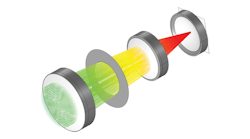
FIGURE 1. An example assortment of multielement optical lenses.
In this tutorial, the differences between physical-optics and full-wave-optics analyses are described, as well as when each type of analysis is best used.
Content Dam Lfw Online Articles 2019 03 1903lfw Pro 4
Multiphysics Version 5.4 features COMSOL Compiler, among other new features.
(Courtesy of COMSOL)
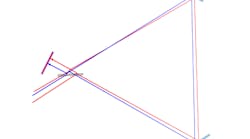
FIGURE 1. A Petzval lens, shown here in a ray diagram, includes (from left to right) a first focusing lens, the aperture stop, a second focusing lens, a field-flattening lens, and the image plane.
Optical ray tracing software reveals temperature effects by performing a coupled analysis of a lens system’s structural, thermal, and optical performance.

Buyer’s Guide Listing Information

Click here for listing information and directions on how to add or update your company.

Request More Information From COMSOL

By clicking above, I agree to Endeavor Business Media's Terms of Service and consent to receive promotional communications from Endeavor, its affiliates, and partners per its Privacy Notice. I also understand my personal information will be shared with the sponsor of this content, who may contact me about their offerings per their privacy policy. I can unsubscribe anytime.

Additional content from COMSOL

1812 Lfw Nb 3
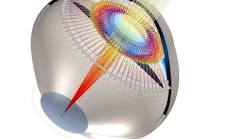
By modeling the complete optical parameters of the human eye using COMSOL Multiphysics software, a prescription for a series of noninvasive laser procedures for presbyopia patients...
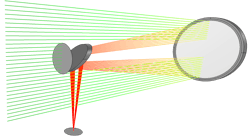
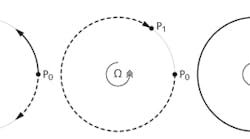
FIGURE 1. Light propagates clockwise (dashed line) and counterclockwise (solid line) along the edge of a circle, which is also rotating.
Rotation effects on laser ring gyroscopes and other rotating optical devices can now be straightforwardly modeled.
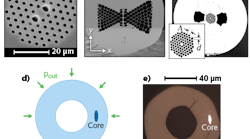
(Image credits: [a] H. Y. Fu et al., Appl. Opt., 47, 15, 2835–2839 (2008); [b] A. Anuskiewicz et al., Opt. Express, 20, 21, 23320–23330 (2012); [c] J. H. Osório et al., Appl. Opt., 53, 17, 3668–3672 (2014); and [d, e] Unicamp)
Photonic-crystal optical fibers (a), microstructured fibers with a triangular lattice of holes (b), and side-hole photonic-crystal fibers (c) used as pressure sensors are significantly more complex than an embedded-core capillary fiber design (d and e) that can be fabricated using standard drawn-fiber techniques.
Embedded-core capillary fibers are a less-complex pressure-sensing alternative to microstructured/photonic-crystal fiber designs.
COMSOL adds ability to simulate Sagnac interferometers and other rotating optical systems.
The Ray Optics Module, an add-on for the COMSOL Multiphysics software, now simulates optical phenomena in laser and fiber ring gyroscopes.
Content Dam Lfw Print Articles 2018 01 1801lfw Nb F1
Researchers have designed and fabricated a robust varifocal microlens array that operates by applying a voltage across a flexible transparent dielectric elastomer to force the...
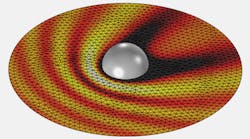
FIGURE 1. A full-wave finite-element analysis is done of electromagnetic waves that scatter off a metallic sphere. The electric-field variations make it necessary to use a fine mesh throughout the computational domain. As a consequence of the Nyquist-Shannon sampling theorem, each wavelength needs to be resolved with a minimum of two sampling points to avoid aliasing. In practice, this leads to a requirement of at least a handful of finite elements per wavelength in each spatial direction.
Optics-modeling electromagnetics software beats the Nyquist criterion while saving computation time.
Content Dam Lfw Online Articles 2017 07 1708lfw Pro 2
Version 5.3 of Multiphysics and Server software for modeling and simulation includes the boundary element method for modeling electrostatics and corrosion effects.
(Courtesy of AFIT)
A calculation showing the effects of a linear phase gradient created by a row of varying V-antennas and modeled in COMSOL depicts a normal plane wave striking the metasurface from the bottom and exiting the metasurface at an angle (a); a scan of the focal region produced by a fabricated cylindrical metalens with a focal length of 5 cm and operating at an 8 μm wavelength shows a high-quality focal region (b).
Researchers are using the COMSOL Multiphysics software package to numerically model several metasurface-lens designs.
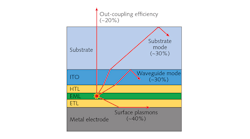
FIGURE 1. A schematic of a multilayer OLED structure that shows various types of light losses.
Surface-plasmon modeling and nanostructured electrode design show promise for increased light output and efficiency in organic LED (OLED) systems.
FIGURE 1. Light guidance is shown in a 1.8-μm-diameter silicon fiber at a 1.55 μm wavelength.
Computer modeling of semiconductor-core optical fibers made using high-pressure chemical vapor deposition reveal the fibers' useful properties.
Content Dam Lfw Online Articles 2016 08 1609lfw Pro 9
The COMSOL Multiphysics 5.2a and COMSOL Server simulation software environment includes three new solvers to deliver fast, memory-efficient computations.
Part of the Multiphysics version 5.2 simulation software, LiveLink for SOLIDWORKS connects software simulations and 3D design.