Global coverage of photonics technologies, applications, and innovations
Lasers/Sources
Optics
Quantum
Test/Measurement
Buyer's Guide
Sections
Lasers/Sources
Optics
Quantum
Test/Measurement
Buyer's Guide
Laser Processing
Bio & Life Sciences
Detectors/Imaging
Executive Forum
Special
Innovators Awards
Issue Archive
Newsletter Archive
Webinars
White Papers
Events
Videos
Podcast
Contact
Contact Us
Get Published
Advertise
Subscribe Now!
Affiliated Brands
DATA CENTER FRONTIER
LIGHTWAVE
VISION SYSTEMS DESIGN
ELECTRONIC DESIGN
Follow us on
https://www.facebook.com/pages/Laser-Focus-World/126899915297
https://www.instagram.com/laser.focus.world
https://www.linkedin.com/showcase/laser-focus-world
https://youtube.com/laserfocusworld
Home
>
Back Issues
>
Laser Focus World
>
Volume 54, Issue 07
Volume 54, Issue 07
Volume 54, Issue 07
Subscribe
Digital
Edition
Archives
ISFW/Stuttgart University
Lasers & Sources
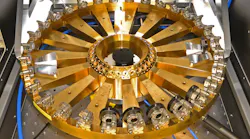
Business Forum: One laser to serve them all
July 2, 2018
Positioning, Support & Accessories
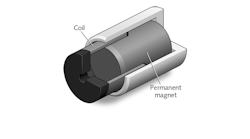
Motion Control: Linear motion devices: What is a voice-coil actuator?
July 2, 2018
Optics
Laser Optics: The art and science of designing optics for laser-induced damage threshold
July 2, 2018
Research
News of the (photonics) world
July 2, 2018
(Image credit: Dan Houchin, Olympus America)
Detectors & Imaging
Advanced Imaging/Optical Design: Functional superresolution microscopy progresses
July 1, 2018
More content from Volume 54, Issue 07
(Courtesy of MPB Communications)
Research
Photonics Products: Fiber Lasers: Visible fiber lasers do red, green, and now bluish
Frequency doubling, frequency combining, and Raman shifting allow near-IR fiber lasers to produce visible light for science and industry.
July 1, 2018
Lasers & Sources
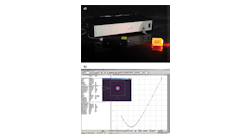
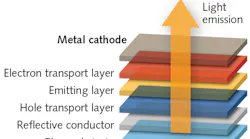
OLEDs: Reducing particle defects in cathode film layers improves OLED yield
Thermal evaporators that promote low particle defects in metal cathode layers allow OLED devices to compete with alternative display technologies.
July 1, 2018
(Image credit: Joseph Shaw/Montana State University)
Software
Thermal Imaging: All-sky thermal infrared cloud imager uses low-cost bolometer camera
A compact thermal imager measures spatial and temporal patterns of clouds across the entire sky using a low-cost reflective sphere and commercial bolometer camera.
July 1, 2018
Research
Visible Laser Diodes: VI Systems develops room-temperature yellow laser diode emitting at 599 to 605 nm
The experimental device emits 300 ns pulses at a 1 kHz repetition rate.
July 1, 2018
(Image credit: Tianjin University)
Test & Measurement
Fiber Sensing: Angled optical fiber end performs large-temperature-range sensing
Compared to more complex Bragg gratings and photonic crystal fibers, a simple angled optical fiber end can sense temperature over an expanded range.
July 1, 2018
(Image credit: Business Wire)
Detectors & Imaging
Optical Coherence Tomography: OCTA clears quantitation hurdle
Optical coherence tomography angiography (OCTA) has achieved another milestone: mainstreaming of quantification.
July 1, 2018
Positioning, Support & Accessories
Optical Cooling: All-optical cryogenic cooling of sensors eliminates vibration
A mercury cadmium telluride IR sensor in a working Fourier-transform infrared spectrometer is all-optically cooled to 135 K.
July 1, 2018
Test & Measurement
Multiphoton holography and new opsins allow 3D tens-of-neurons stimulation
Combining 3D-SHOT with multiphoton imaging enables read and write operations with individual neurons precisely in time and space.
July 1, 2018
Research
Laser-driven microbubble implosion is new way to create a tabletop particle accelerator
Scientists have discovered a novel particle acceleration mechanism called microbubble implosion.
July 1, 2018
Detectors & Imaging
New TFT technology could replace LTPS for OLED, LCD, and solar devices
New thin-film-transistor (TFT) technology will increase efficiency and luminance while decreasing cost.
July 1, 2018
Detectors & Imaging
Laser-induced damage threshold is measured for CMOS, CCD, and digital-micromirror devices
Researchers have characterized the laser-induced damage threshold (LIDT) for CMOS and CCD cameras, as well as digital micromirror devices.
July 1, 2018
Lasers & Sources
Ultrathin organic DFB membrane lasers enable bendable security tags
Newly created membrane lasers of nominal 200 nm thickness can easily lase when illuminated with another laser source.
July 1, 2018