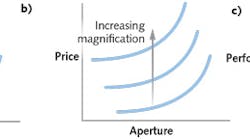
Beam expansion is essential in many laser systems, so correctly specifying the necessary beam expander to achieve the right performance without excessive cost has become crucial...
By sandwiching a quantum well or dot membrane between diamond or SiC heat sinks, laser-media cooling is maximized and the need for a reflector mirror is eliminated, extending ...
Through laser Doppler vibrometry, the shape and size of a bell can be optimized through modeling—rather than trial and error—to resonate with the desired harmonious sound.
By identifying high-power fiber laser challenges and optimizing the optical fiber accordingly, a 4.3 kW single-mode output has been achieved, with further upscaling and new ultrafast...
The depth and variety of photonics technologies and products on display is an inspiring reminder of the pivotal role of the largest photonics tradeshow in the world.
An extremely small graphene-based free-space electroabsorption modulator has a low operating voltage of 1 to 3 V and low power consumption -- and it's CMOS-compatible.
To date, there are a few methods for testing integrated silicon photonics devices and circuits, but they all lack the possibility of comprehensive autonomous testing at the wafer...
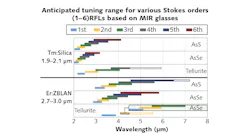
Distributed-feedback Raman fiber lasers based on π-phase-shifted fiber Bragg gratings written in a glass fiber called a low-phonon-energy fiber have been developed.
Data-detection algorithms for smartphones can capture data at a 4.5 kbit/s rate, and do it in conditions of low-enough light that it can be used as a nonline-of-sight (NLOS) system...
Scientists at the Naval Research Laboratory have characterized the tunable refractive index of vanadium dioxide by measuring its optical transmittance and reflectance as a function...
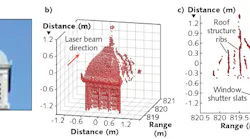
A newly developed single-photon imaging lidar system uses a 10 mW eye-safe 1550 nm laser, indium gallium arsenide/indium phosphide SPAD detector, and algorithms specially designed...
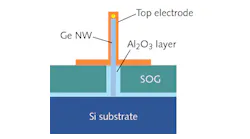
A germanium nanowire photodetector for operation at a 1.55 μm wavelength with a diameter of only 20 nm integrated on a silicon substrate has been developed.
Fortunately, engineers prefer acronyms to shorten the time they spend describing technologies. Without acronyms, we would be forced to refer to a certain large trade fair in Munich...