The Cutting Edge: How Wenzel Metal Spinning Enhances Efficiency and Precision with Prima Power’s 5-Axis Laser Technology
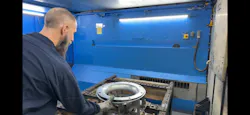
In metal manufacturing, efficiency ensures survival, while precision defines excellence. For decades, the industry has balanced high-volume speed and the meticulous quality required for bespoke components. Today, that balance has shifted. The introduction of 5-axis laser technology has fundamentally altered the landscape, turning what was once a bottleneck into a competitive advantage.
At the forefront of this evolution is Wenzel Metal Spinning, an industry leader that recently integrated the Prima Power LASER NEXT 2131 into its workflow. This isn't just an upgrade; it is a transformation. The move to 5-axis laser cutting represents a leap forward in how complex parts are finished, offering a synthesis of speed and accuracy that manual methods simply cannot touch.
The game-changer lies in the LASER NEXT 2131's specific capabilities, including its "split cabin" design. By allowing the laser to machine a part on one table while an operator safely loads or unloads the other, the machine eliminates downtime. This creates a rhythm of continuous production—a seamless flow in which the laser runs continuously, and productivity increases dramatically.
This investment has enabled Wenzel to significantly improve employee safety, enhance quality, handle more complex geometries, and minimize waste, while also creating new revenue streams and business opportunities.
The Industry Leader in Metal Spinning
Founded in 1982, Wenzel Metal Spinning operates multiple facilities in Indiana and Alabama, with roughly 250,000 square feet of manufacturing space and about 150 employees.
As one of the largest dedicated metal spinning companies in the United States, Wenzel Metal Spinning maintains an extensive industry presence and a diverse market portfolio.
"We avoid being limited to a single niche," says Ryan Funkhouser, General Manager at Wenzel Metal Spinning, regarding the company’s strategic direction. "Our capabilities span from high-volume industrial components, like trash can lids, to high-precision, specialized parts made with exotic materials for the Mars Rover." Recent projects range from everyday industrial components to specialized aerospace parts where tight tolerances and exotic alloys make post‑processing especially demanding.
Metal spinning, also known as spin forming, metal forming, or metal turning, is a cold work metal forming process that forms metals into axially symmetric parts. The process begins with a flat sheet of metal cut into a disk and is then formed over a rotating mandrel into a round shape.
Popular round shapes that are constructed from metal spinning include conical, parabolic, toroidal, and more. This process can be performed manually or by a CNC lathe and is a cost-effective alternative to low-volume or short-run metal stamping.
Beyond flexibility, the metal spinning process offers several metallurgical benefits, resulting in stronger, higher-quality parts. Spinning creates a fine-grained, fibered structure that enhances tensile strength, hardness, and toughness. The cold-forming process, done at room temperature, increases material strength through work hardening, which often allows for the use of lighter-gauge materials. It also forms a single solid piece, eliminating weak points like welds or joints and improving pressure resistance. Unlike machining, spinning directs grain flow to match the part's shape, thereby maintaining its structural integrity.
Metal spinning is a unique process where industrial manufacturing meets artisanal craftsmanship. Unlike stamping or casting, spinning involves rotating a metal disc or tube at high speeds and forming it over a mandrel using localized pressure.
"It’s as much an art form as it is a science," Funkhouser explains. "In many ways, it’s akin to blacksmithing. You are moving metal, flowing it, changing its grain structure. It requires a feel for the material that you can’t just program into a computer."
This "feel" is why Wenzel values its long-term employees so highly. The experience required to spin metal correctly—to know how much pressure to apply before the metal tears or wrinkles—takes years to master.
The Pivot to 5-Axis
Because the metal spinning process is so labor-intensive, it is essential to avoid bottlenecks in both upstream and downstream steps that disrupt production and reduce efficiency. For years, Wenzel faced a critical post-processing challenge: trimming spun parts was a slow, labor-intensive, and often dangerous manual task that lacked the consistency needed to meet increasingly complex customer demands.
"We were hitting a wall," admits Funkhouser. "We had the capacity to spin parts faster than we could finish them. We saw opportunities to bid on contracts that required complex hole patterns or intricate cutouts, but we declined them because we couldn't do the finishing cost-effectively. We needed a solution that could handle the 3D nature of our parts."
The search for a 5-axis laser was rigorous. The Wenzel team evaluated the top players in the market, narrowing the field to a German manufacturer, a Japanese competitor, and Prima Power.
"We looked at everything—speed, footprint, software, and support," says Ned Kaiser, Operations Manager, who helped lead the operational evaluation. Kaiser notes that the decision wasn't just about specs on a sheet.
"Ultimately, Prima Power best fit our overall needs, including the size of the cabin, which accommodated the larger parts we make. We chose them because they understood our business. They didn't just try to sell us a laser; they looked at our workflow. They showed us how the
LASER NEXT 2131 could integrate into our shop floor. Plus, the support network was there. When you’re running production, you can’t wait three weeks for a technician." For Wenzel, the combination of cabin size, split‑cabin workflow, and responsive service support made Prima Power the clear fit.
The Transformative Impact of the LASER NEXT 2131
The implementation of the LASER NEXT 2131 has been a game-changer for Wenzel's daily operations, with its impact felt across every metric: efficiency, productivity, quality, and safety. Installed a little over a year ago, the system has quickly become a core part of daily production, rather than a side experiment.
Efficiency and Speed
The most immediate impact was on cycle times. Operations that used to take hours of manual labor or required moving parts between multiple machines are now completed in minutes.
"The speed improvement is massive," says Production Manager Lance Angus. "What previously required multiple jigs, steps, and several workers is now down to a single operation. We’ve cut tasks that took over an hour down to just a few minutes." For example, certain inlet parts that once required five separate post‑operations now run as a single, roughly one‑minute operation on the laser.
Angus emphasizes the value of the split cabin design. "The split cabin is the real time-saver. While the laser is cutting a complex pattern on the left table, an operator is unloading a finished part and loading a raw one on the right table. The laser beam is almost always on. We aren't paying an operator to watch a machine work; we’re paying them to keep the machine fed."
Complexity and Quality
Beyond speed, 5-axis capability has enabled Wenzel to achieve tolerances previously impossible. In manual trimming, human error is inevitable. A slipped hand or a tired operator leads to inconsistent edges. The laser, however, never gets tired, never loses accuracy.
"The consistency is vital," adds Kaiser. "We are doing aerospace parts where the tolerance is plus or minus five thousandths of an inch.
This precision has drastically reduced scrap. In the world of metal spinning, especially with exotic alloys, scrapped parts are expensive. "When you've already put time and effort into spinning a piece of Inconel or Hastelloy, scrapping it at the trimming stage is a costly waste."
Safety and Workflow
One of the understated benefits of the new system is safety. Manual trimming of spun metal often involves handheld routers, band saws, or circle shears—tools that present significant injury risks.
"We’ve removed the most dangerous element of the job," Angus points out. "Operators aren't fighting with sharp metal edges or spinning blades anymore. They are loading a fixture and pressing a button. The enclosure keeps everything contained. It’s cleaner, it’s quieter, and vastly
safer." By moving trimming and cutouts into the enclosed cell, Wenzel has sharply reduced operator exposure to sharp edges, shavings, and handheld cutting tools.
Support and Reliability
"Installing and integrating new technology into production is often challenging, but Prima made it manageable," Kaiser explains. "They were on-site to assemble the machine, adjust parameters, train our team, and ensure the software integrated seamlessly with our existing systems. Their applications engineer guided us in mastering its capabilities and tackling complex processes and geometries—essential for success in laser cutting."
As Angus puts it, "Honestly, that thing just runs. Compared to some of the other equipment, we hardly ever see it down. It’s just solid. We don’t have to worry about it, which is huge for us when we’re scheduling work."
Workforce Motivation
The machine's high-tech design has positively impacted employee retention and morale. In an industry that often struggles to attract younger workers, cutting-edge technology is a big draw.
"Younger workers want to operate advanced equipment like the Prima laser," Funkhouser notes.
"It involves programming, robotics, and high-tech interfaces." The Prima's user-friendly design makes it easy to learn, helping new operators get up to speed quickly. It shifts the role from 'laborer' to 'technician,' giving employees the sense that they’re developing valuable skills for the future rather than doing repetitive tasks. Automation isn’t replacing our workforce—it’s inspiring them." Experienced operators like Ned Kaiser now combine decades of hands-on forming knowledge with 5‑axis programming, allowing Wenzel to bring complex, one‑off jobs online in minutes instead of hours.
Strategic Growth
The integration of the Prima Power LASER NEXT 2131 has done more than just speed up production; it has catalyzed a shift in Wenzel's corporate identity. The laser has unlocked capacity, allowing the company to aggressively pursue additional market opportunities.
"It has fundamentally changed our strategy," Funkhouser reflects. "We are no longer just a spinning house that does a little fabrication on the side. We are a full-service metal forming solution. This machine has given us the confidence to take on more complex jobs where spinning is just the starting point."
The efficiency gains have rippled through the entire business, improving cash flow by reducing work-in-progress inventory and shortening lead times.
Looking toward the horizon, Funkhouser hints at a broader evolution. "We are looking at the future and realizing that our name needs to reflect our expanded capabilities," he explains. "We’re no longer just Wenzel Metal Spinning; we are becoming 'Wenzel Metal Spinning and Fabrication.' By combining the traditional craft of spinning with the advanced precision of Prima Power’s 5-axis laser cutting, we are well-positioned for future growth."