Mobile UV dual-comb spectrometer precisely detects and fingerprints air pollutants
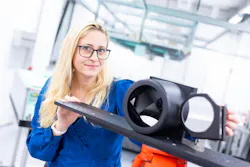
A few years ago, Professor Birgitta Bernhardt and her group at Graz University of Technology’s (TU Graz) Institute of Experimental Physics in Austria designed the world’s first broadband UV dual-comb spectrometer to detect and measure air pollutants (gases) in real time. And now they’ve created a compact mobile version (see video)—even more sensitive and accurate—to capture molecular fingerprints of air pollutants at high spectral resolution (1 GHz), broad bandwidth (12 THz), and sub-second acquisition within a range of 2.5 kilometers (1.55 miles).
Dual-comb spectroscopy combines high spectral resolution, broad spectral coverage, and short acquisition times. While the approach is known for its strengths within the infrared (IR) spectral region, the UV spectral region remains somewhat underexplored because of the lack of direct frequency comb sources.
But the UV spectral region “is extremely important, and our device lets you access not only rotational and vibrational information of molecular samples but also excite electronic transitions,” says Bernhardt. “These are the triggers for various photochemical reactions that are highly relevant to the photochemistry within our atmosphere.”
Two laser frequency combs
Dual-comb spectroscopy combines two laser frequency combs with slightly different repetition rates, and when these pulse trains interfere it down-converts high optical frequencies efficiently into the directly accessible radio frequency domain.
“We can also measure the optical properties—absorption or dispersion—of samples under scrutiny via a simple photodiode,” says Bernhardt. “This technique is now exploited within the UV region by frequency tripling the IR output of a compact single-cavity dual-comb laser.”
Thanks to the dual-comb principle, their spectrometer reaches resolving powers of one million within sub-second measurement times. “It’s a unique combination you can’t reach with conventional grating spectrometers or monochromators,” Bernhardt says.
Main benefits of the group’s design changes? Broad spectral coverage of >10 THz, short acquisition times (half a second), high resolving power of 1,000,000, high sensitivity (absorption cross sections as low as 10-22 cm2/molecule), and high precision—all within the underexplored UV spectral region.
“Our setup is mobile and doesn’t require any complicated electronic stabilization equipment,” Bernhardt points out. “Our previous project included an extra electronic rack. By simplifying it, the spectrometer is on its way to becoming user friendly—and not only by spectroscopy experts.”
Unprecedented UV dual-comb spectrometer precision
The group’s mobile UV dual-comb spectrometer allowed the researchers to precisely measure the UV light absorption patterns of formaldehyde (an atmospheric pollutant and volatile organic compound). These measurements were so precise, “we detected a multitude of formaldehyde resonances never been experimentally observed before,” says Bernhardt. “It was a great moment!”
In fact, their measurements revealed the rotational constants of formaldehyde in physics textbooks since the 1960s are inaccurate. Collaborating with the Center for Astrophysics’ Harvard & Smithsonian Atomics and Molecular Physics division in the U.S., Bernhardt and her group corrected the values of this fundamental molecule-specific parameter by as much as 15%.
Professor Rolf Breinbauer and his group at TU Graz’s Institute of Organic Chemistry contributed to this work by providing high-purity formaldehyde.
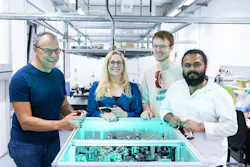
Next up: Even more compact and stable?
Wherever spectral signatures may be of interest, there are applications for a mobile UV dual-comb spectrometer. It can be used for fundamental spectroscopy (to explore fundamental optical properties of any species), air quality measurements (atmospheric chemistry of pollutants), biosensing, and even for medical breath analysis.
Clearly, improving the precision of air quality measurements stands out because of its potential to help demystify atmospheric air pollution and its impact on Earth.
“Our spectrometer is always in operation in my Coherent Sensing group at TU Graz,” says Bernhardt. “Because there are plenty of species to be studied, we’re exploring ways to make the instrument even more compact to do field campaigns of air quality measurements with it.”
FURTHER READING
L. Fürst et al., PhotoniX, 7, 33 (2026); https://doi.org/10.1186/s43074-026-00250-6.
About the Author
 Sally Cole Johnson
Sally Cole Johnson
Editor in Chief
Sally Cole Johnson is Laser Focus World’s editor in chief, and she has more than 25 years’ experience as a science and technology journalist. She specializes in physics and semiconductors, and wrote for the American Institute of Physics for more than 15 years, and also covered theoretical physics and neuroscience for the Kavli Foundation, and complexity for the Santa Fe Institute. Johnson has also written extensively about military embedded systems, high-performance computing, software-defined networks, and infosec. She is a member of the National Association of Science Writers (since 2001).
When she isn’t writing about optics, photonics, or quantum advances, you can find her outside in northern NH in the garden with birds landing in her hand or heading for the mountains with her bike, skis, or crampons and ice axe.