EPIC’s Antonio Castelo talks to Roger Artigas of Sensofar Metrology
Antonio Castelo: Can you share the backstory behind Sensofar?
Roger Artigas: In 1998, I began a Ph.D. in optical engineering at the Polytechnic University of Catalonia, where I worked on advanced optical 3D surface metrology systems under the supervision of Professor Ferran Laguarta. At the time, I was not especially interested in business. But Ferran was convinced that the technology had strong commercial potential, so in 2001 we decided to launch Sensofar Tech SL together to bring the technology we’d developed to market.
From the beginning, we knew that neither Ferran nor I had the business background needed to build a successful company on our own, so we recruited Marc Canales as general manager. He’s now our CEO.
AC: How has the company evolved?
RA: In the early years, we focused on developing noncontact optical profilometers for applications such as semiconductor wafer inspection, precision engineering, and materials science in research laboratories. We started with confocal techniques for 3D measurements, but quickly realized that other methods, such as interferometry, were better suited to certain applications. As a result, from 2003 onward we began developing products that combined both techniques on the same platform.
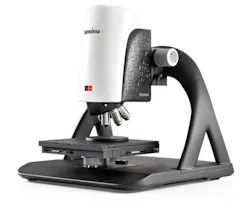
In 2010, we expanded our product range into full optical metrology platforms, with the S neox becoming our flagship product. This system combines three measurement technologies—interferometry, confocal microscopy, and focus variation—within the same sensor head, and it can automatically switch between methods depending on the type of surface being measured. Later, we launched the S lynx platform, designed as a compact and flexible 3D surface profiler capable of measuring texture, roughness, and waviness across multiple scales.
During the early 2010s, regulatory agencies increased scrutiny of implantable medical devices. In response, in 2012 we created Sensofar Medical as a new division within the Sensofar Group. Its purpose was to apply Sensofar’s optical surface measurement and inspection technology to biomedical and medical device manufacturing, with a particular focus on implantable devices such as vascular stents and heart-valve frames.
By 2015, optical metrology had matured significantly, and many companies were beginning to integrate metrology into advanced manufacturing environments. At this point, we expanded beyond standalone microscopes and started offering automation solutions and inspection software, allowing our systems to be integrated into manufacturing lines. Since then, our instruments have been widely used in semiconductor manufacturing, additive manufacturing, precision optics, and medical-device inspection.
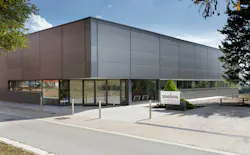
During the past 25 years, our workforce has grown to around 120 people, with approximately 30% working in research, engineering, and software development. Sensofar and Sensofar Medical are headquartered in Terrassa, near Barcelona, where our R&D and manufacturing activities are concentrated. We have also built a global sales and support network, with offices in the United States, Germany, United Kingdom, Taiwan, Korea, India, and China.
AC: How important is R&D for the company?
RA: It is absolutely essential. Today, our R&D department is divided into four main areas.
The first is software development, which includes around 15 software engineers, as well as a smaller team dedicated to software quality assurance.
The second is engineering, where we design our systems from scratch, covering mechanical and optical design as well as electronics, cabling, and housing.
The third area is what we call science. This is where we work closely with customers to improve our products in the directions they need. In this group, the focus is not on software development itself, but on algorithms and data processing, running master students and industrial Ph.D. This is really where the core technology behind our products is created. A system can be copied from a hardware perspective, but without the right mathematics and data treatment, the measurement results will not have the same level of fidelity.
The fourth area is metrology quality. Every microscope we manufacture goes through a two-day validation process to ensure that it complies with our metrological requirements as well as with the relevant ISO standards.
AC: How did you find customers in the beginning?
RA: At first, we worked through distributors, but it was very difficult. Interferometers from U.S. companies were already well established within the market, and many customers were hesitant to buy a new technology from a newly created company.
Fortunately, during the technology development stage—before the company officially existed—a scientific instrumentation distributor in Germany introduced us at trade shows and university fairs. This helped us gain visibility. Our main advantage was that we were the only company combining confocal and interferometric techniques in a single instrument, which made our solution very attractive to customers who needed to solve a broader range of applications.
AC: Do you see strong potential for integrable sensor heads?
RA: Yes, absolutely. We started working on these kinds of products around 10 years ago so we could offer not only the measurement head itself, but also a software development kit that would allow integrators to build their own applications and control systems around it. Today, a significant part of Sensofar’s turnover comes from this product line.
But there are important challenges. For example, in the semiconductor industry, our technology may need to operate inside large and highly complex machines that include wafer cassettes, front-opening unified pods (FOUPs), robotics, wafer alignment, and wafer handling systems. Manufacturing environments are far more demanding and risky than simply working with a standalone measuring head. This is why we need to support our integrators very closely, ensuring that the complete system works reliably and that their machines are developed according to the requirements of end customers.
AC: How do you envision the future compared to your competitors?
RA: Our first competitors were American and Japanese companies, many of which followed our approach by combining the same technologies to gain market share. Because their manufacturing strategies and business policies are different, they’re often able to compete aggressively on price.
In recent years, we have also seen strong market growth in China, where local companies have been appearing very rapidly. Many of them still do not have the organizational structure needed to provide strong customer support, but some are already producing very good products. It’s probably only a matter of time before the most capable of them reach the same level of maturity that we offer today.
Despite this competition, I believe we will remain among the top three players within the microscopic 3D metrology market. It’s not only because of the quality of our products but also because of our strong customer focus. 3D metrology requires a great deal of education. You need to explain the optical principles behind the measurement, help customers understand the results, and support them when problems arise. For this reason, we invest heavily in pre-sales, sales, and especially post-sales support. It’s always been our policy.
AC: What’s your advice for the next generation of entrepreneurs?
RA: If you’re passionate about what you do and are determined to take your technology as far as possible, you will most likely succeed. But if you don’t have a strong business mindset, make sure you build the company with someone who does—someone interested in the commercial and financial side, who can take care of these responsibilities. Otherwise, you may end up spending too much time on tasks you don’t enjoy and aren’t naturally suited for, and it can easily lead to failure.
Finally, it’s crucial from the very beginning to step outside the university environment and connect with industry. Joining associations such as EPIC can be extremely valuable, because it helps you build relationships with companies within your sector, identify synergies, and better understand the ecosystem in which you operate.
About the Author
Antonio Castelo
Antonio Castelo is Technology Manager for Bio-Medical and Lasers at the European Photonics Industry Consortium (EPIC).