Laser beam quality matters
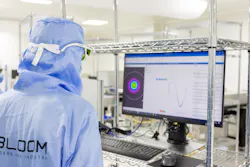
As electronic devices shrink and computing power demands soar, chip designs must become even more compact. This requires lasers with tighter beam stability, higher pulse‑to‑pulse energy consistency, and nanometer‑scale positioning accuracy.
Bloom Laser, based in Pessac, France, designs and produces pulsed lasers of exceptional beam quality—with laser beam quality factor (M2) values <1.2. To achieve these values and enhance the performance of their lasers, the company relies on a beam propagation analyzer to deliver core measurement data including astigmatism, asymmetry, and M2.
Measurements are taken at each step of the development and manufacturing processes to ensure the beam quality of the lasers. For continuous power measurement, two sensor discs are integrated into each laser system for remote diagnostics and maintenance.
Durable lasers
High-power pulsed lasers are essential drivers of continued miniaturization and densification for the semiconductor industry. But the requirements of these nanoscale applications are enormous. Lasers within critical micromachining environments must deliver highly precise beams and also be robust in 24/7 production lines.
Manufacturers also expect uninterrupted operations for tens of thousands of operating hours. Bloom Lasers specializes in high-end pulsed lasers for micromachining and mainly focuses on ultraviolet (UV) and green wavelengths. Their lasers are used globally for high-end applications such as drilling vias or cutting printed circuit boards (PCBs), panel-level advanced packaging (ablation, drilling, cutting), and wafer-level processing (scribing and dicing).
Ease of use, consistent measurements are key
During Bloom Lasers’ production capacity ramp-up at Cité de la Photonique (also in Pessac), a new measurement technology was deemed necessary. The company was using an Ophir M2-200s device from MKS, but the integrated lens of this device of this now-discontinued model couldn’t capture laser beams with larger diameters. New M2 measurement devices were needed for several production lines with diverse requirements: It must be able to measure M2, astigmatism, and asymmetry, as well as be suitable for various wavelengths and different pulse durations within the nanosecond and picosecond range.
The company’s engineers selected three M2 measurement devices and put them through extensive testing. One was ruled out because the measurement results weren’t accurate, while another was too slow and demonstrated significant weaknesses in usability.
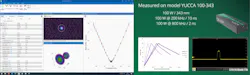
An Ophir BeamSquared device, the successor to the Ophir M2-200s, outperformed the others, and the Bloom Laser engineers found it was easy to use and that it delivered all relevant measurement data within 20 seconds. To check UV laser beams—the device setup on the bench remains the same—they simply swap to a UV lens, change the laser wavelength in the software, and start measuring.
Laser beam analyzers raise quality bar
Several of these laser beam analyzers are used by Bloom. Beyond the absolute measurement results of each instrument, the engineers tested the devices’ reproducibility to ensure the lasers all deliver the same high-quality beams.
To do this, Arnaud Guillosou, a development engineer for Bloom, checked not only the repeatability of the measurements with a single device but also measured the beam of one laser with each of their measurement units. He concluded that the reproducibility across devices was excellent.
Confident the measurement devices deliver reliable and reproducible results, they are now used extensively by Bloom for production. Nearly every manufacturing step involved in building their lasers is accompanied by measurements taken with the beam propagation measurement system. The engineers check the behavior of the beam at the focal point and also track the spatial shape of the beam along the caustic.
To optimize the process, a pass/fail indicator is frequently used at this stage. Along the production chain—from assembly of the seed laser to amplification and beam shaping—numerous measurements are performed with the beam propagation measurement system. The end user customer also receives a detailed report containing extensive system data along with their new fiber laser.
Built to last
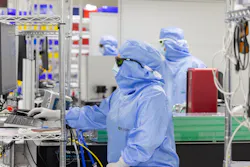
Beyond extensive testing and quality control for laser production, Bloom integrates many sensors within each unit to enable remote monitoring and status. Customers get the option to trigger an automatic loop to adjust the laser. If further remote support is needed, Bloom engineers simply request the relevant log files, remotely adjust the laser, and close the track.
Closed-mesh quality controls used for laser manufacturing, as well as remote monitoring and maintenance options, ensure the durability of Bloom lasers. Precise and reproducible beam quality measurements are essential for the company to meet the high demands of 24/7 operation, particularly for semiconductor manufacturing.
About the Author
 Dagmar Ecker
Dagmar Ecker
Independent PR Specialist
Dagmar Ecker is an industrial engineer and technical journalist based in Germany with over 25 years of experience in B2B communication. She specializes in mechanical engineering and information technology. Holding a degree in Industrial Engineering, she combines deep industry insight with technical knowledge.