Choosing a Fluorescence Microscopy Source
If you want a successful fluorescence microscopy system, look beyond just panel design. It’s essential to choose fluorophores, filters, light sources, and detectors that all work together to deliver the best possible result. Want to know how to do that? Choosing a Fluorescence Microscopy Source delivers insights into the best practices, pitfalls, and nuances of specifying this essential element of your fluorescence microscopy system.
Industry expert Roy Kinoshita will help you:
• Avoid the most common pitfalls of selecting a fluorescence microscopy excitation source.
• Understand the nuances of the most widely used fluorescence microscopy light sources, including mercury arc lamps, xenon bulbs, and LED light sources.
• Review the benefits and challenges of LED light sources vs mercury arc lamps, as well as best practices for choosing an LED light source for microscopy.
• Learn about excitation filter and fluorescence filter set selection to optimize your experiments.
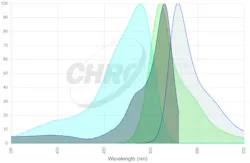
• Discover how to use the Chroma Technology Spectra Viewer for excitation and emission spectra matching.
Download this Podcast to learn more about choosing a fluorescence microscopy source today and access the insights you need to assemble a cost-efficient fluorescence microscopy system that will deliver quality data for experiments today and in the future.