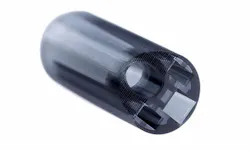
Pushing the limits of precision 3D Printing an ureteroscope endcap A ureteroscope is a flexible medical device designed to access the kidney and urinary system for diagnosis and treatment. At the heart of this innovation lies a key component: the endcap, where a camera sensor, fiber-optic illumination, and multiple working channels for tools and irrigation need to come together seamlessly. Why 3D Printing? The device’s compact size—just 3mm in diameter—and the intricate endcap design, requiring walls down to 50 – 75µm that run the length of the 5mm part, demand an exceptional level of precision that only BMF’s microArch 3D printers can achieve. Conventional manufacturing approaches are inadequate or cost-ineffective at producing the miniature features required. As such, micro 3D printing was the only viable solution for quickly and cost-effectively generating end-use components with the tolerances and resolution required for the application. Developing a single-use scope for endourology using micro 3D printing RNDR Medical developed is a novel single use scope for endourology that is utilized for direct visualization and navigation to enable diagnosis and treatment of disorders in the urinary tract, such as kidney stones and urothelial carcinoma, as well as pyeloscopy procedures enabling therapeutic access to the renal pelvis and kidneys. The ureteroscope features a digital high-definition camera and illumination that enable direct visualization of the anatomy as well as fluid irrigation for maintaining a clear image. A working channel allows passage of therapeutic tools through the ureteroscope, such as lithotripsy fibers and retrieval baskets, for the treatment of kidney stones. A key component of this device is the distal tip, which houses the camera chip and illumination source as well as directing fluid paths for irrigation and providing the link from the working channel to the exterior anatomical environment. These elements must be contained within the distal tip with a high degree of precision while being sealed to prevent fluid ingress into the device, all within a .130” diameter profile. Additionally, the exterior geometry of this tip component must be atraumatic to the anatomy as it is the forward facing, advancing part of the device. Containing all these design elements within such a small profile requires a component with complex 3D geometry, tight tolerances, and wall thickness traditionally only achievable through niche micro molding. Finally, mature component volumes are in the tens of thousands per year, which would result in a longer ROI for expensive micro molding. Request a Benchmark Part We’d be happy to manufacture a benchmark part so you can assess our quality.