‘Reality-infused’ neural networks may revolutionize design of nanophotonics
Instead of teaching deep neural networks from idealized simulations, a group of researchers in Singapore and China asked: Why not teach it directly from experimental optical measurements?
Designing nanophotonic devices today often relies on repeated electromagnetic simulations, which can be extremely time consuming and costly. But even if a design performs perfectly in simulations, the fabricated device can behave quite differently because of imperfections introduced during manufacturing. This discrepancy between simulations and reality motivated the group’s work (see video).
“It led us to develop a ‘reality-infused’ deep learning framework, in which the neural network learns from large-scale experimental optical data,” says Wei Chen, an assistant professor at Hefei University of Technology in China. “By incorporating real-world device behavior into the design process, we can bridge the gap between theory and fabrication to make AI-assisted photonic design far more practical.”
Design optical surfaces via imperfections
The group, led by Chen, Zhaogang Dong, an associate professor at Singapore University of Technology and Design, and Jinfeng Zhu, a professor at Xiamen University’s Institute of Electromagnetics and Acoustics in China, used nanoscale metallic metasurfaces devices made of periodic nanostructures coated with silver to train their deep neural network. These structures manipulate light through diffraction and plasmonic resonances, and produce highly angle-dependent optical responses.
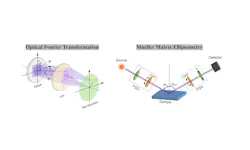
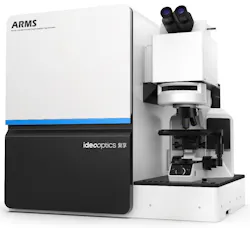
At the heart of the researchers’ design concept is establishing a direct connection between a device’s structural parameters and its experimentally measured optical behavior. “Rather than relying solely on idealized simulations, we use large-scale experimental optical data to capture how real fabricated devices respond to light,” says Chen. “It allows the design process to be guided by physical reality—including fabrication variations and material imperfections that are often difficult to model accurately. Experimentally, we use angle-resolved imaging spectroscopy to rapidly measure how these structures interact with light from different directions. This generates a large amount of optical data that serves as the foundation for training AI models.”
On the AI side, they use transformer-based neural networks, which are similar to architectures widely used in modern language models. “AI learns the relationship between device geometry, illumination conditions, and optical spectra,” Chen says. “Once trained, it can rapidly predict device performance and perform inverse design to identify structures that produce desired optical responses.”
Let AI learn from the behavior of fabricated nanophotonic devices
Researchers frequently use finite-difference time-domain (FDTD) electromagnetic simulations, which numerically solve Maxwell’s equations to model how light propagates through and interacts with nanostructures. “These simulations provide valuable physical insights, such as resonance mechanisms and electromagnetic field distributions,” Chen says. “But they often assume ideal geometries and material properties, while real fabricated devices contain roughness, dimensional variations, and other imperfections. Instead, we combine physical understanding with large-scale experimental measurements to allow AI to learn the actual behavior of fabricated devices.”
Why is letting AI learn from fabricated nanophotonics devices a big deal? This approach moves beyond simulation-driven design toward reality-driven design. “Conventional AI approaches in nanophotonics are usually trained using simulated data,” Chen explains. “As a result, predictions can deviate significantly from experimental outcomes. Our framework learns directly from measured optical responses and dramatically improves agreement with experiments while maintaining the speed advantages of AI-based design. In practice, researchers can rapidly predict device performance, explore large design spaces, and perform inverse design in real time—without repeatedly running computationally expensive simulations.”
One of the most thrilling moments for the group came when they compared the AI predictions with experimentally measured angle-resolved spectra. “Traditionally, reproducing these complex optical responses requires substantial computational effort,” says Chen. “Seeing the neural network accurately reconstruct intricate resonance features directly from experimental knowledge was remarkable.”
A real ‘aha’ moment struck when they realized the network wasn’t merely fitting data—it had effectively learned the experimentally accessible optical parameter space. “Once this happened, it could generate new designs and predict optical responses almost instantly. This was the point we realized this approach can fundamentally change how nanophotonic devices are designed,” Chen says.
The biggest challenge involved was acquiring a sufficiently large and reliable experimental dataset because machine learning models are only as good as the data used to train them.
“Collecting thousands of angle-resolved optical measurements required significant effort in device fabrication, characterization, calibration, and data processing,” Chen says. “Another challenge was dealing with experimental variability. Unlike simulations, real measurements contain noise and fabrication-induced deviations. Developing a neural network that remains robust under these conditions was essential to achieving accurate predictions.”
One particularly interesting result was seeing how optical resonances evolve as the illumination angle changes. “The simulations revealed rich mode interactions, including resonance hybridization and signatures associated with quasibound states in the continuum (quasi-BICs),” Chen says. “These effects are difficult to fully appreciate from individual spectra but become visually striking when mapped across angle-resolved dispersion diagrams. More importantly, our AI framework was able to reproduce these complex optical behaviors in real time, which previously would have required extensive simulation resources.”
Wide range of applications ahead
Potential applications ahead span a wide range of photonic technologies, such as optical sensing, spectroscopy, imaging systems, color engineering, optical communications, beam shaping, and next-gen metasurface devices.
“More broadly, the methodology itself may be even more important than any single application,” says Chen. “Reality-infused AI could become a general design paradigm for photonics and enable researchers to rapidly develop devices across wavelength ranges from the deep ultraviolet to the mid-infrared. Our approach can significantly accelerate the translation of nanophotonic concepts from laboratory demonstrations to real-world technologies.”
Many elements of the framework are good to go right away. “Our current software allows real-time forward prediction and inverse design of optical responses, which make it immediately useful for photonic researchers and engineers,” says Chen.
Down the road, the group plans to extend the framework toward more complex 3D photonic structures, high-Q resonant systems, and multifunctional metasurfaces. “We’re also interested in extending our approach to emerging areas such as optical sensing, integrated photonics, and quantum photonics devices,” Chen adds. “Ultimately, our vision is to create AI-assisted photonic design platforms that learn directly from experimental reality to significantly shorten the cycle from concept to functional device.”
FURTHER READING
W. Chen et al., PhotoniX, 7, 19 (2026); https://doi.org/10.1186/s43074-026-00238-2.
About the Author
 Sally Cole Johnson
Sally Cole Johnson
Editor in Chief
Sally Cole Johnson is Laser Focus World’s editor in chief, and she has more than 25 years’ experience as a science and technology journalist. She specializes in physics and semiconductors, and wrote for the American Institute of Physics for more than 15 years, and also covered theoretical physics and neuroscience for the Kavli Foundation, and complexity for the Santa Fe Institute. Johnson has also written extensively about military embedded systems, high-performance computing, software-defined networks, and infosec. She is a member of the National Association of Science Writers (since 2001).
When she isn’t writing about optics, photonics, or quantum advances, you can find her outside in northern NH in the garden with birds landing in her hand or heading for the mountains with her bike, skis, or crampons and ice axe.