Imec expands opportunities for photonic integrated circuits and copackaged optics
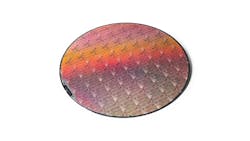
Leili Shiramin, Ph.D., silicon photonics portfolio manager at imec, answers our quick questions about imec’s offerings within this realm, which includes photonic integrated circuits (PICs) and copackaged optics (CPO). Headquartered in Leuven, Belgium, imec is the world’s largest independent research and innovation center for nanoelectronics and digital technologies.
Laser Focus World: What’s imec currently focusing on with PICs?
Leili Shiramin: When we talk to customers, it quickly becomes clear which design and technology innovations they need to stay competitive. For companies active in artificial intelligence (AI) and datacom, the challenge is well known: Enabling the fast, reliable, and energy-efficient transfer of massive amounts of data.
There are two main routes to tackle this. The first is to further improve pluggable optical transceivers. It’s why we’ve developed our portfolio of technologies supporting 200-Gbit/s per lane that enable 800G and 1.6T pluggable optics. Existing devices include silicon waveguides, plasma-enhanced chemical vapor deposition (PECVD) silicon nitride (SiN) waveguides, undercut structures, grating couplers, ring modulators, germanium silicon (GeSi) electro-absorption modulators, and germanium (Ge) photodetectors. There are extra options available on 300-mm wafers. For example: immersion lithography to enable high-performance devices such as ring modulators, broadband directional couplers, and two-dimensional (2D) grating couplers and through-silicon vias (TSVs) to enable advanced three-dimensional (3D) integration. All of these devices are included in our process design kit (PDK), so customers can get started designing right away.
Imec’s offerings include design, processing, testing, packaging, validation, and supply chain services to accelerate time to market. We’re currently developing devices and technologies to support 400-Gbit/s per lane and enable 3.2-Tbit/s pluggable optics, such as advanced high-speed modulators and high-speed germanium on silicon (Ge-on-Si) photodetectors.
The second enables CPO, in which the optical engine is integrated into the package of the switch application-specific integrated circuit (ASIC) to dramatically shorten the electrical signal paths that now connect to the pluggable transceivers at the chassis edge and drive up power consumption and cause signal integrity issues. In the near term, optical engines will be mounted on organic substrates. Our long-term vision consists of interposer-level integration. This requires breakthroughs such as the hybridization of silicon photonics as well as advanced 3D integration methods.
Beyond datacom, we also see promising emerging applications for integrated photonics that we want to support through our mature platforms, such as sensing—for health and automotive applications—and quantum computing. In this respect, the addition of our ultralow-loss SiN platform promises to be a real gamechanger.

LFW: What do typical design requests look like?
Shiramin: Requests for imec’s intellectual property (IP) blocks for designing are quite common. But increasingly, we’re also seeing demand for system-level design expertise—combining components and building blocks into a coherent whole to achieve a high yield with minimal design iterations.
Such system-level design requires a broad set of highly specialized skills that most companies don’t have in-house. Our IC-Link division (www.imeciclink.com/en), which provides customized solutions for chip manufacturing, offers these capabilities as a service and is attracting a lot of interest.
LFW: Biggest benefits of imec’s expertise in PIC design for the industry?
Shiramin: Imec has been the world’s leading semiconductor R&D hub for more than 40 years, and our activities in silicon photonics date back to 2000. Over the years, this has resulted in a rich IP portfolio that covers both electronic circuits—front-end and back-end, including high-speed wireline data converters—and PICs.
Our constantly expanding IP library is available for licensing with a signed agreement. Combined with our in-house design support and end-to-end manufacturing services through IC-Link, we enable customers to achieve their ideas in silicon by accelerating the path from concept to production.