Europe’s battery manufacturing industry is repositioning itself
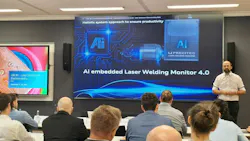
International competition in the battery industry is intensifying. At the same time, demand for batteries is growing, both for electric mobility and stationary applications. As the Laser Symposium Electromobility LSE’26 in Aachen in September 2026 made clear, Europe can draw on its own strengths: flexible manufacturing expertise, high process quality, and the ability to adapt production to different cell chemistries, designs and volumes. With precise self-learning laser processes, Europe’s battery industry can regain momentum beyond competition based purely on price.
Battery storage is finding an ever wider range of applications. In mobility, batteries have long since moved beyond passenger cars and are increasingly being used in trains, heavy mining equipment, ferries and other commercial vehicles. At the same time, demand is growing for stationary storage systems for power grids and renewable energy. This expanding range of applications creates widely varying requirements for cell chemistry, performance, service life, format and production volume as well as new markets in which the lowest price per kilowatt-hour is not the only factor that matters.
It’s exactly this diversity that creates opportunities for Europe’s battery industry. Asian manufacturers can produce standardized cells in very large volumes at significantly lower cost. Simply copying this production model is, however, not a viable strategy for European companies. More promising are applications with special requirements, small or medium production volumes, and frequently changing cell chemistries or formats. In these markets, short development times, flexible equipment, stable processes and production with as few defects as possible matter alongside cost.
Quality becomes an economic factor
Flexibility alone, however, is not enough. As production volumes increase, so does the challenge of keeping every individual process under control. A battery pack can contain a very large number of welded joints, and a single faulty joint may render an entire component unusable. For this reason, Bosch sees the real challenge not in laser welding itself, but in transferring complex processes to scalable production while keeping defects to a minimum. Christian Elsner of Mercedes-Benz and Steffen Rübling of TRUMPF showed how closely process stability, sensor technology and quality assurance are now intertwined in series production.
Quality becomes a direct economic factor. Rework, scrap and elaborate inspections cost time and money. The earlier a defect is detected – or prevented altogether – the more efficiently production can operate. At LSE’26, IPG Photonics summarized the requirements for scalable battery manufacturing in three points: productivity, process stability and verifiable quality.
A joint presentation by BMW and weldmetrix showed how these requirements can be met in series production. As manufacturers scale pilot lines to high-volume production, the number of joints rises dramatically. Since purely manual or visual inspection cannot keep pace, sensors capture process data during welding itself. The two companies aim to assess every individual joint, detect defects at an early stage and store production data so that it remains traceable over the long term.
New Infrared Technologies also presented methods at LSE’26 for monitoring laser processes in real time. The goal is a production environment in which faulty welds are detected during the process itself. Quality assurance is thus increasingly moving from a downstream inspection step into the manufacturing process itself.
Laser processes adapt to production
Laser technology itself is also becoming more flexible. Modern laser sources and optics make it possible to tailor the energy distribution to the material and the joint. Dynamic beam shaping provides additional degrees of freedom, for example when welding aluminum or copper-aluminum joints.
At the Chair for Laser Technology LLT at RWTH Aachen University, Julia Vielhauer is working with Fraunhofer ILT and other partners to investigate how dynamically shaped laser beams affect the melt and material properties. The researchers intend to control the energy input in space and time so that the properties of the joint can be tailored to the specific application.
This development meets the needs of a battery industry in which cell chemistries, materials and formats are changing rapidly. Instead of building rigid processes and equipment from scratch for every new product, manufacturers can adapt laser processes through beam guidance, process parameters, sensor technology and software.
Not cheaper, but faster, more flexible and more reliable
For Europe’s battery industry, this points to a different path from direct cost competition in standardized mass-produced cells. Opportunities arise where different applications require specialized batteries, production volumes vary and manufacturers need to respond quickly to new cell concepts.
Europe has extensive expertise in laser technology, mechanical engineering, automation and process development. The key will be to combine these capabilities so that new products can move more quickly from development into stable industrial production.
Alexander Olowinsky is confident: “We do not have to be the lowest-cost supplier in every market. What matters is our ability to industrialize batteries and electrical systems reliably, flexibly and quickly. That is where we see a future for European manufacturing, and laser technology provides many of the tools we need.”
LSE’26 therefore showcased more than new laser sources, sensors and manufacturing processes. Contributions from the battery industry, automotive manufacturing, mechanical engineering and research demonstrated how Europe can respond to intensifying competition: not by copying Asian mass production, but by developing manufacturing concepts that can adapt quickly to new products and markets. This is precisely where Europe’s battery industry has an opportunity to regain momentum.