SiC Tubes for Kiln and Furnace Construction: High Strength and Thermal Shock Resistance
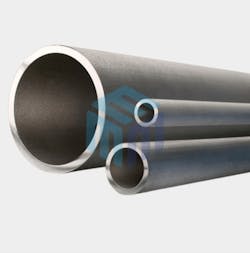
March 2026 - Edison, New Jersey- Industrial furnaces and kilns operate in some of the most extreme thermal environments found in modern manufacturing. Processes such as ceramic sintering, metal heat treatment, glass processing, semiconductor manufacturing, and powder metallurgy require structural components capable of withstanding temperatures exceeding 1400–1700°C, while maintaining dimensional stability and mechanical integrity.
Traditional materials such as alumina, mullite, and quartz often struggle under these conditions due to limitations in thermal conductivity, thermal shock resistance, and mechanical strength. As a result, advanced ceramics like silicon carbide tubes have become essential structural components in furnace and kiln construction.
Today, SiC tube systems, silicon carbide rods, and silicon carbide pipes are widely used for thermocouple protection, burner tubes, structural supports, heat exchangers, and protective furnace liners. Multiple SiC grades including Recrystallized SiC Tube, Reaction-sintered SiC Tube, Pressureless sintered silicon carbide tube, nitrogen-carbon bonded SiC tube, and NBSiC tube materials—allow engineers to tailor performance for specific furnace conditions.
Because of their high mechanical strength, excellent thermal conductivity, and exceptional resistance to thermal shock, silicon carbide tubes and rods have become key materials for modern high-temperature furnace design.
Material Science of Silicon Carbide
Silicon carbide (SiC) is a covalently bonded ceramic compound composed of silicon and carbon atoms arranged in a crystalline lattice. This bonding structure provides extremely high hardness and thermal stability.
|
Property |
Typical Value |
|
Density |
3.05–3.15 g/cm³ |
|
Hardness |
~2500 HV |
|
Thermal conductivity |
120–200 W/m·K |
|
Maximum service temperature |
1600–1800°C |
|
Thermal expansion coefficient |
4–5 × 10⁻⁶ /K |
|
Flexural strength |
300–450 MPa |
These properties make silicon carbide tubes and silicon carbide rods particularly suitable for furnace environments where both thermal and mechanical stresses occur simultaneously.
Why SiC Tubes Are Used in Furnace Construction
High-temperature furnaces require components that can withstand:
● repeated heating and cooling cycles
● high mechanical loads
● corrosive gases
● thermal gradients
Silicon carbide tubes provide several advantages over conventional ceramic materials.
|
Property |
Impact on Furnace Performance |
|
High thermal conductivity |
Rapid and uniform heat transfer |
|
Thermal shock resistance |
Prevents cracking during heating cycles |
|
High flexural strength |
Supports structural loads |
|
Oxidation resistance |
Long component lifespan |
|
Wear resistance |
Suitable for abrasive environments |
Because of these benefits, silicon carbide tubes and silicon carbide pipes are frequently used as load-bearing components in kiln structures.
Thermal Shock Resistance of SiC Tubes
One of the most critical performance characteristics of SiC tubes is their ability to resist thermal shock.
Thermal shock occurs when a material experiences rapid temperature changes, causing internal stresses due to uneven thermal expansion.
Silicon carbide has exceptionally high thermal shock resistance due to:
- high thermal conductivity
- low thermal expansion coefficient
- strong covalent bonding structure
|
Material |
Thermal Shock Resistance |
|
Quartz |
Poor |
|
Alumina |
Moderate |
|
Mullite |
Moderate |
|
Silicon carbide tube |
Excellent |
This property allows SiC tubes to survive rapid furnace heating cycles without cracking or structural damage.
Types of Silicon Carbide Tubes Used in Furnaces
Different furnace applications require different types of silicon carbide tubes.
Recrystallized SiC Tube (RSiC)
A Recrystallized SiC Tube is produced by sintering high-purity silicon carbide particles at extremely high temperatures.
● high temperature capability (~1650°C)
● excellent thermal shock resistance
● high thermal conductivity
● good oxidation resistance
Typical uses include:
● kiln beams
● furnace rollers
● structural supports
● burner tubes
Reaction-Sintered SiC Tube (RBSiC)
Reaction-sintered SiC Tube (RBSiC) is manufactured by infiltrating molten silicon into a porous SiC structure.
|
Property |
Performance |
|
Density |
High |
|
Strength |
Excellent |
|
Porosity |
Very low |
|
Wear resistance |
High |
Because of these features, RBSiC tubes are widely used in industrial furnaces and heat exchangers.
Pressureless Sintered Silicon Carbide Tube (SSiC)
A Pressureless sintered silicon carbide tube is produced through advanced ceramic sintering processes that eliminate free silicon.
● extremely high corrosion resistance
● superior hardness
● high purity structure
● excellent high-temperature performance
These materials are ideal for chemical processing furnaces and semiconductor manufacturing environments.
Nitrogen-Carbon Bonded SiC Tube (NBSiC)
Nitrogen-carbon bonded SiC tube materials combine silicon carbide with nitrogen bonding phases to improve oxidation resistance.
● improved oxidation resistance
● good mechanical strength
● cost-effective furnace components
This type is commonly used for kiln furniture and industrial heating systems.
Role of SiC Rods in Kiln Structures
In addition to tubes, SiC rod components and silicon carbide rods are widely used as structural elements in kiln construction.
Typical uses include:
● kiln support beams
● heating element supports
● burner tube stabilizers
● furnace structural frames
Because silicon carbide rods combine high stiffness with thermal shock resistance, they maintain structural stability even at extremely high temperatures.
Silicon Carbide Thermocouple Protection Tubes
Accurate temperature measurement is essential in high-temperature furnaces.
However, thermocouples can be damaged by:
● high temperatures
● furnace gases
● molten materials
● mechanical vibration
A silicon carbide thermocouple protection tube shields the sensor while maintaining accurate heat transfer.
● protects thermocouples from corrosion
● improves sensor lifespan
● maintains accurate temperature readings
These tubes are commonly used in glass furnaces, heat treatment systems, and metallurgical kilns.
Silicon Carbide Pipe Applications
Silicon carbide pipes are used in high-temperature heat transfer systems and chemical processing equipment.
Typical applications include:
● heat exchangers
● gas transport systems
● furnace gas distribution
● corrosive chemical environments
The high corrosion resistance of silicon carbide pipe materials makes them suitable for aggressive industrial environments.
Factors Affecting Silicon Carbide Tube Price
The silicon carbide tube price and silicon carbide rod price depend on several engineering and manufacturing variables.
|
Factor |
Impact |
|
Material grade (RSiC, RBSiC, SSiC) |
Major |
|
Tube diameter and length |
Moderate |
|
Manufacturing process |
Significant |
|
Custom machining |
Increases cost |
|
Surface finishing |
Minor |
Custom industrial furnaces often require customized silicon carbide tubes manufactured to exact design specifications.
Benefits of Customized Silicon Carbide Components
Many furnace manufacturers require customized silicon carbide components to optimize furnace performance.
Advantages of customized silicon carbide
● precise dimensional control
● improved furnace efficiency
● optimized heat transfer
● longer operational lifespan
Through advanced machining processes, manufacturers can produce customized silicon carbide tubes, rods, and furnace components tailored to complex industrial systems.
Failure Mechanisms in SiC Tubes
Although SiC ceramics are extremely durable, failure can occur under certain conditions.
|
Cause |
Description |
|
Thermal shock |
Rapid temperature change |
|
Mechanical overload |
Excessive furnace load |
|
Oxidation |
High oxygen exposure |
|
Chemical corrosion |
Aggressive gases |
Proper furnace design and material selection can significantly reduce these risks.
Future Developments in Silicon Carbide Furnace Materials
Research continues to improve the performance of silicon carbide tubes and rods.
Emerging innovations include:
● ultra-dense SiC microstructures
● oxidation-resistant coatings
● composite SiC ceramics
● advanced customized silicon carbide furnace components
These technologies are helping extend the lifespan and performance of high-temperature furnace systems.
Silicon carbide has become one of the most important materials used in modern kiln and furnace construction. Its combination of high mechanical strength, excellent thermal conductivity, and exceptional thermal shock resistance makes it ideal for demanding high-temperature environments.
From Recrystallized SiC Tube and Reaction-sintered SiC Tube materials to Pressureless sintered silicon carbide tube and nitrogen-carbon bonded SiC tube solutions, these advanced ceramics provide reliable performance in extreme industrial conditions.
By selecting high-quality SiC tubes, silicon carbide rods, and silicon carbide thermocouple protection tubes, engineers can significantly improve furnace durability, energy efficiency, and operational reliability.
Need high-performance SiC tubes for furnace or kiln construction in the USA?
M-Kube Enterprise LLC supplies precision-engineered silicon carbide tubes, rods, and customized silicon carbide furnace components for demanding industrial applications.
✔ Durable Recrystallized SiC Tube and Reaction-sintered SiC Tube solutions
✔ Precision Pressureless sintered silicon carbide tube manufacturing
✔ High-quality silicon carbide thermocouple protection tube components
✔ Competitive silicon carbide tube price and silicon carbide rod price
Contact M-Kube Enterprise LLC today to discuss customized silicon carbide solutions for your kiln, furnace, or high-temperature processing system.