Oxygen Detection Using 760 nm DFB Laser
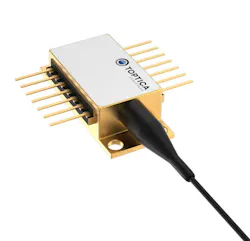
Accurate and stable oxygen measurement remains a persistent challenge for many industrial and environmental applications. Conventional sensing technologies, such as electrochemical and paramagnetic sensors, often suffer from drift, limited lifetime, cross-sensitivity, and frequent calibration requirements, leading to increased mainte-nance costs and reduced reliability. Tunable Diode Laser Spectroscopy (TDLS) has emerged as a powerful alternative, enabling fast, selective, and calibration-free gas analysis. At the core of this technology are Distributed Feedback (DFB) lasers operat-ing in the near-infrared wavelength range, providing narrow linewidths and precise wavelength control required for high-resolution absorption measurements. This appli-cation note highlights how high-performance DFB laser diodes developed by TOPTICA EAGLEYARD enable robust and highly sensitive optical oxygen sensing. It explains the key advantages of TDLS-based systems and demonstrates how optimized DFB sources contribute to improved accuracy, long-term stability, and reduced operational costs in demanding sensing environments.
-
Oxygen Absorption in the A-Band
The absorption spectrum of molecular oxygen contains several electronic-vibrational bands in the visible and near-infrared spectral regions. Among these, the R-branch of the A-band around 760 nm is particularly prominent and has become the preferred wavelength region for optical oxygen sensing. The A-band originates from electronic transitions in the oxygen molecule and consists of numerous narrow rotational absorption lines. These lines are sufficiently strong to allow precise measurements even at atmospheric oxygen concentrations. At the same time, interference from other atmospheric gases is relatively low in this spectral region, which simplifies the detection process.
Because of these properties, the oxygen A-band is frequently used in both laboratory instruments and industrial sensing systems. The narrow spectral structure of the band makes it ideally suited for measurements with tunable diode lasers that can selectively target individual absorption lines. -
DFB Laser Technology
DFB lasers are semiconductor laser diodes that incorporate a periodic Bragg grating within the laser cavity. This grating acts as a wavelength-selective feedback mechanism and enforces single longitudinal mode operation.
As a result, DFB lasers emit light with a very narrow spectral linewidth and excellent wavelength stability. Compared with conventional Fabry–Perot diode lasers, DFB lasers provide significantly improved spectral purity. Their emission spectrum is typically dominated by a single longitudinal mode with a side-mode suppression ratio of approximately 50 dB or higher. This high spectral selectivity is essential for gas sensing applications, where the laser must precisely match narrow molecular absorption lines. Another advantage of DFB lasers is their relatively high optical output power combined with compact size and efficient electrical operation. These characteristics enable integration into compact sensing instruments and industrial measurement systems. For spectroscopic applications such as oxygen sensing, DFB lasers must provide stable single-mode emission together with reproducible wavelength tuning behavior. DFB laser diodes manufactured by EAGLEYARD are designed to meet these requirements and are widely used in precision spectroscopy, environmental monitoring, and industrial sensing systems. -
Wavelength Tuning of DFB Lasers
In DFB lasers, the emission wavelength can be adjusted by varying either the injection current or the temperature of the laser device. Changes in temperature affect the refractive index and the effective grating period inside the laser cavity, resulting in a shift of the emission wavelength.
Typical temperature tuning coefficients are approximately 0.06 nm/K. Injection current variations also influence the refractive index through carrier density and thermal effects, resulting in smaller but faster wavelength shifts. In practical sensing systems, temperature tuning is generally used for coarse wavelength adjustment in order to align the laser emission with the desired oxygen absorption line. Current modulation is then applied to perform rapid wavelength scanning across the absorption feature.
-
Oxygen Detection Using Tunable Diode Laser Absorption Spectroscopy
The detection of oxygen using DFB lasers is commonly implemented using Tunable Diode Laser Absorption Spectroscopy (TDLAS). In this technique, the wavelength of the laser is scanned across a molecular absorption line while the transmitted light intensity is measured by a photodetector placed behind the gas sample .As the laser wavelength passes through the absorption line, a portion of the optical power is absorbed by oxygen molecules.By analyzing the absorption signal obtained during the wavelength scan, the oxygen concentration in the measurement volume can be determined with high accuracy. Because the measurement targets a specific molecular transition, the method offers excellent selectivity compared to broadband optical sensors. The length of the optical path determines the sensitivity of the measurement. In some systems, multipass gas cells are used to increase the effective path length and enhance the absorption signal.
-
Typical Laser Characteristics for Oxygen Sensing
DFB laser diodes used for oxygen sensing typically provide the following characteristics:
Parameter
Typical value
Center wavelength
~760 nm
Output power
several mW
Linewidth
< 4 MHz
Side-mode suppression ratio
> 40–50 dB
Temperature tuning
~0.06 nm/K
Several DFB laser diodes operating in the oxygen A-band are available from TOPTICA EAGLEYARD. These devices provide narrow-linewidth single-mode emission near 760 nm and are optimized for spectroscopic applications such as TDLAS-based gas sensing.
Part Number
Output Power
Package
Notes
EYP-DFB-0760-00040-1500-TOC03-0005
40 mW
TO-3
Standard package
EYP-DFB-0760-00040-1500-TOV01-0005
TO-5
Small form factor
EYP-DFB-0760-00040-1500-BFW01-0005
Butterfly
(free space)Collimated output
EYP-DFB-0760-00012-1500-BFY12-0005
12 mW
Butterfly (fiber pigtail)
Highly integrated
– with optical isolator6. Conclusion
DFB laser diodes operating near 760 nm provide an effective light source for optical oxygen detection. Their narrow linewidth, stable single-mode emission, and tunable wavelength enable precise targeting of absorption lines within the oxygen A-band, allowing highly selective and sensitive measurements using TDLAS techniques. DFB lasers from TOPTICA EAGLEYARD are well suited for such spectroscopy applications. For further information on suitable laser diodes for oxygen sensing or other gas detection applications, please contact TOPTICA EAGLEYARD or visit the company website.