FBH to present space and quantum technologies at ILA 2026
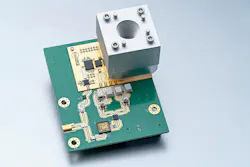
Space-qualified diode lasers, highly integrated MIMO radar systems, high-performance RF components, and robust quantum technologies: At ILA Berlin 2026, Ferdinand-Braun-Institut will showcase its latest developments for aerospace, communications, and sensor applications. The focus is on compact technologies designed for reliable operation under demanding conditions.
Berlin, 26.05.2026
Ferdinand-Braun-Institut (FBH), based in Berlin, will present recent developments for space and quantum technologies at ILA Berlin 2026. From June 10-14, 2026, the institute will present a broad technology portfolio at the Berlin-Brandenburg joint booth in hall B, booth 310, including space-qualified diode lasers and photonic modules, high-frequency and radar systems, and miniaturized quantum sensors.
A key focus lies on ultra-reliable diode lasers for use under the harsh conditions of space. FBH develops miniaturized, radiation-hard laser sources for pump laser and LiDAR applications, alongside robust packaging and integration technologies. For compact and highly integrated laser modules, the institute relies on its established MiLas® platform. The technology combines micro-optical integration with high mechanical and thermal stability and suits applications such as optical communication, sensing, and quantum technologies in space.
The exhibition will also feature integrated radar systems for earth observation and navigation alongside high-performance microwave components. In addition, FBH will present 3D-printed ceramic technologies for robust quantum systems, ultra-compact optical isolators for wavelengths between 400 nm and 950 nm, and miniaturized sensor systems. These technologies address key requirements of modern space missions: high integration density, low weight, energy efficiency, and robust, scalable system architectures.
Additively manufactured ceramics for robust quantum sensors
In the field of quantum technologies, FBH will highlight its expertise in additively manufactured technical ceramics for miniaturized and robust quantum systems. The institute uses 3D-printed oxide and nitride ceramics to create compact and highly stable platforms that integrate optical, electronic, and atomic components. Applications range from portable quantum sensors to frequency metrology and optical calibration systems.
As an example, FBH will present its compact optical frequency reference module “CerAMRef.” The micro-integrated system generates a Doppler-free spectrum of the rubidium D2 line at 780 nm and enables precise laser stabilization for quantum sensing and metrology applications. The fiber-coupled assembly integrates the spectroscopy system, including micro-optical components, rubidium vapor cell, photodiode, and readout electronics on an additively manufactured alumina bench. The module requires only about one watt of electrical power and achieves a relative frequency instability below 3 × 10-12 at an averaging time of one second. In addition, FBH will exhibit a quantum-optical magnetometer integrated on a 3D-printed ceramic at the DLR booth in the Space Pavilion for applications aboard the International Space Station (ISS).
Modular MIMO mmWave radar for space applications
Another exhibit is a new modular MIMO millimeter-wave radar system for high-resolution imaging and sensing in space applications. FBH is developing the system together with project partners based on a scalable panel architecture. The design allows radar apertures to be flexibly adapted to different mission requirements. The system operates at 95 GHz with a bandwidth of 10 GHz and supports both conventional radar tasks and imaging applications.
Each module integrates eight transmit and eight receive channels and uses multiple-input multiple-output (MIMO) technology to create an effective aperture without moving mechanical parts. This enables high-resolution radar-based imaging with precise beam steering. FBH develops key components in-house, including DDS circuits, monolithic integrated circuits (MMICs) for frequency up- and down-conversion in indium phosphide DHBT technology, and corrugated horn antennas.
Ka-band power amplifier for satellite communications
FBH will also present a newly developed Ka-band power amplifier based on microstrip technology. The amplifier targets applications in satellite communications and space-based radio-frequency systems. FBH developed the amplifier within a project for the European Space Agency (ESA). The project aimed to further improve the institute’s gallium nitride-based 150 nm gate technology for high output power at high frequencies while increasing reliability. The amplifier is expected to deliver output powers exceeding 5 W in the Ka-band with high energy efficiency.