Machine Vision that Never Blinks: allPIXA neo 10GigE and SWIR Linescan Cameras Set Higher Standard for Food Safety at Production Speed
Konstanz, Germany, March 18, 2026 — Every second, thousands of food and beverage products move through processing lines across the United States, and every second, the margin for error is zero. Contaminated ingredients, mislabeled allergens, improperly sealed packaging, and invisible surface defects do not simply damage brand equity: they put lives at risk, trigger costly recalls, and land food processors in the crosshairs of federal regulators.
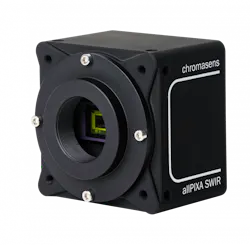
Allied Vision is answering this challenge with its allPIXA neo and allPIXA SWIR linescan camera series. Carrying forward the Chromasens™ legacy, these imaging platforms are are now under the Allied Vision portfolio. Both are purpose-built to match the cycle times of the world's most demanding production lines while capturing the sub-surface and spectral detail that human inspectors and traditional cameras simply cannot see.
The scale of the contamination problem is troubling. Data from the U.S. Centers for Disease Control and Prevention (CDC) and the U.S. Department of Agriculture Economic Research Service (USDA ERS) paint a stark picture of an industry under systemic pressure. The USDA ERS, drawing on 2023 data, places the total cost of U.S. foodborne illness at $74.7 billion. Nontyphoidal Salmonella alone contributes an estimated $17.1 billion to that burden. These are not projections: they are the measured consequences of contamination that passed undetected through the supply chain.
Allied Vision has engineered allPIXA neo and allPIXA SWIR camera families specifically to address the multi-dimensional inspection challenges of modern food and beverage processing, as well as many other industrial applications. The cameras deliver near-infrared (NIR) or shortwave infrared (SWIR) imaging in a compact, GigE-native platform that integrates directly into existing conveyor and web inspection systems by identifying materials invisible to human eyes or standard cameras.
By analyzing unique light absorption signatures, NIR cameras identify issues like plastic, glass, bones, pathogens, and pesticides in meat, fruit, and dairy. SWIR cameras can also detect foreign objects such as plastics, wood, rubber, stones, and hair by analyzing light absorption. In addition, SWIR cameras detect moisture, bruises, and mold in produce, as well as checking seal integrity in packaging.
allPIXA neo 10GigE: Color and NIR Intelligence at Line Speed
The allPIXA neo CMOS linescan camera is available in 4k (7 µm pixel) and 6k (5 µm pixel) configurations. Its quadlinear sensor captures up to four simultaneous image lines, enabling high-fidelity RGB color imagery and an independent NIR channel in a single pass with no double-scanning, latency, or throughput penalty.
Key performance parameters in food inspection environments:
· 10GigE interface: cost-effective, long-cable integration using commercial off-the-shelf network infrastructure without need for proprietary frame grabbers or CameraLink complexity
· CoaXPress interface option: up to 105 kHz line rates for color, 300 kHz for monochrome
· RGB+NIR simultaneous capture: visible-spectrum color classification combined with near-infrared defect detection in a single camera pass, eliminating the need for dual-camera rigs
· 12-bit dynamic range: resolves subtle tonal gradations critical for ripeness classification, moisture mapping, and bruise detection in fresh produce
Compact form factor: enables integration into space-constrained conveyor systems and retrofit deployments without line modification
allPIXA SWIR: Beyond the Visible Spectrum
Where the allPIXA neo captures the spectral range visible to the human eye and extends into NIR, the allPIXA SWIR camera family operates in the shortwave infrared band. The 950–1,700 nm shortwave infrared band is where food's molecular fingerprint is written, with absorptions tied directly to fat, moisture, and protein that RGB cameras are physically incapable of reading.
Built around a state-of-the-art InGaAs sensor, the allPIXA SWIR is available in 1k resolution (12.5 µm pixels) and 512 resolution (25 µm pixels) models, both delivering line rates up to 40 kHz via a GigE Vision interface. The uncooled sensor design eliminates the operational overhead of cryogenic cooling while preserving the high sensitivity and low-noise characteristics required for reliable in-line inspection.
In food and beverage processing, SWIR imaging enables:
· Foreign object and contamination detection: SWIR wavelengths penetrate packaging and opaque surfaces, exposing glass fragments, bone shards, dense plastic inclusions, and chemical contaminants that are transparent or near-transparent in visible light
· Moisture content mapping: water absorbs SWIR wavelengths in a characteristically distinct profile, enabling non-contact moisture distribution analysis across baked goods, grains, fruits, and processed foods
· Fat and oil distribution analysis: SWIR spectra differentiate lipid content with high spatial resolution, allowing automated classification of marbling grades in meat products and fat distribution in dairy
· Content inspection through opaque containers: SWIR penetrates plastic and paperboard packaging, permitting fill-level verification, undissolved particle detection, and ingredient confirmation without opening or destroying samples
Sugar content and Brix estimation in fresh produce: spectral absorption at SWIR wavelengths correlates with soluble solid concentration, enabling non-destructive ripeness and quality grading at full conveyor speed.
Why the Allied Vision Linescan Platform Outperforms
The allPIXA neo and allPIXA SWIR are not repurposed general-purpose imaging platforms. They are purpose-engineered linescan systems with a pedigree in the most demanding color-critical industrial applications — including high-speed print verification, battery electrode inspection, and semiconductor quality control — now delivering that same precision to food processing:
· Simultaneous multi-spectral capture eliminates the mechanical complexity and timing uncertainty of filter-wheel or multi-camera rigs
· 10GigE native interface leverages ubiquitous, cost-effective Ethernet infrastructure, minimizing total system cost and simplifying integration into existing factory networks
· GenICam-compliant GigE Vision interface on allPIXA SWIR ensures plug-and-play compatibility with industry-standard machine vision software frameworks
· Compact, scalable housing dimensions allow installation in constrained conveyor spaces where competing platforms require mechanical modification
· Free SDK and software tools accelerate application development and reduce time-to-deployment for system integrators
Food processors are operating in a zero-tolerance regulatory environment where a single undetected contaminant or packaging error can result in a nine-figure recall, criminal liability, and irreversible brand damage. The allPIXA neo and allPIXA SWIR deliver spectral intelligence that no manual inspection process or no conventional area-scan camera can replicate, at the line speeds the industry demands.
To learn more, visit www.alliedvision.com.
ABOUT ALLIED VISION
Allied Vision stands for customer-centric 2D Machine Vision solutions, from individual components to fully integrated complete solutions. With deep application knowledge from various technology areas and industries, Allied Vision develops tailored vision solutions that enable customers to make informed decisions based on precise information. The product portfolio ranges from line scan and area scan cameras to lenses and frame grabbers, and from image processing libraries to IP cores – all from a single source. As a trusted partner with a global network of experts and local support, Allied Vision stands by its customers and partners, making collaboration as easy and reliable as possible.
Allied Vision is part of the Machine Vision division of the TKH Group. In January 2026, Allied Vision, Chromasens, Mikrotron, NET, and SVS-Vistek were consolidated under the Allied Vision brand.