Meet Oliver Grass, CEO of Assemblify
Antonio Castelo: What’s the backstory behind your role as CEO of Assemblify?
Oliver Grass: My relationship with Assemblify dates back to the early 2000s when I worked at RSK-elektronik, which later became Assemblify, while I was still working on my MSc in electrical engineering at the Nuremberg Institute of Technology. I wanted to get more involved in the company, and in 2004 I bought the share of one of the founders when he left.
In 2005, we set up Inno-spec GmbH, where I was the CEO, to focus on spectroscopic measurement technology. For the next 20 years, I led the company into the emerging field of industrial hyperspectral imaging, developing systems for applications such as automated sorting, recycling, process monitoring, material identification, and quality inspection.
In 2024, Inno-spec merged with Headwall Photonics. I remained as managing director of Machine Vision until 2026 when Inno-spec was fully absorbed into Headwall, and production and customer support moved to Austria. At this point, I decided to step down from Inno-spec to become CEO of Assemblify, a company that grew out of the original RSK-elektronik business.
Castelo: How has Assemblify evolved?
Grass: Assemblify was always in the background, providing engineering knowledge for Inno-spec’s optical and machine vision products. Our strategy now is to specialize in developing mechatronic/electronic equipment prototypes, producing low quantities in serial and ramp-up, and providing maintenance for highly complex products.
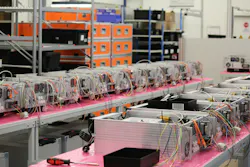
Our services cover the entire chain from engineering to finished equipment—including electronic design and printed circuit board (PCB) layout, PCB assembly, testing, and quality control. Based in Nuremberg with 20 employees, we serve major international industrial partners like Siemens, Continental/Vitesco, DEKRA, and Semikron Danfoss.
Castelo: What were the main challenges when you became CEO of Inno-spec?
Grass: I was in my early 30s, an engineer, and had no clue about management or running a company. The financial data was overwhelming, and it took a year to learn about profit and loss (P&I) and how key performance indicators (KPIs) work. But it was a small company, and I learned by doing.
During my first year, our main customer—who provided 70% of our income—went bankrupt. From then on, it was crisis management. I quickly learned that to survive, we needed our own products and to form partnerships.
Castelo: What products did you produce in the beginning?
Grass: During the mid-2000s, we mainly produced and developed products for training and education, such as electronic demonstration equipment and automation technology for industrial automation and control, for companies like Siemens and Festo Didactic.
We wanted to be more independent, so we went direct to customers to increase margins, which were very low and were preventing us from creating a buffer to have some financial stability.
We worked directly with schools and universities, but we discovered a product is more than a piece of functioning hardware. A product needs a manual, a description, packaging, logistics, and a sales and marketing department behind it. It was a valuable lesson because it taught me that even if you have the best product, you won’t sell it if nobody knows you have it.
Castelo: You spent many years working with hyperspectral cameras. What were your main challenges?
Grass: We started in hyperspectral in 2005, and there were already many providers of fiber-based spectrometers. We didn’t have a better technology or know much about spectroscopy, but at the time hyperspectral was a free field. We decided not to focus on the scientific or high-end because Specim (Spectral Imaging Ltd.) was already established as a very high-end provider.
So we decided to focus on ‘fit for purpose’ at the best possible price for industrial users. Although margins were low, we scaled with our customers, and this is basically the success story of Inno-spec.
The main challenge was pricing. Costs didn’t fall as expected and market access became problematic, especially for food applications, our main market. In fact, food and beverage are still struggling with hyperspectral because the prices are too high. My expectation is that within 2 to 3 years, new technologies such as on-chip spectral filtering, snapshot architectures, and AI-based processing will resolve these pricing issues.
Castelo: How are requirements in hyperspectral imaging evolving?
Grass: During the past 20 years, hyperspectral users and integrators gained experience in where to look and what to look for. Requirements have become tighter and stronger—not only in terms of quality but also for specific wavelengths, lighting, resolution, or a certain speed of the camera with enough throughput to recognize the material.
Currently, I don’t see the market asking for ever-more pixels, more throughput, or more light for their own sake. Requirements are mostly application-dependent. Resolution, speed and, above all, illumination must be matched to a specific task. It’s why customized lighting is so important. AI and everything that comes with it will solve many of the remaining problems, so the core technology doesn’t need to improve dramatically.
Castelo: What’s your advice for going through a merger?
Grass: The reason behind our merger with Headwall is that was we wanted their scale and they wanted our industrial expertise. My first piece of advice is to use a consultant, especially if you’re negotiating in a foreign language. We decided to use one to negotiate with an American private equity firm. Negotiations were tough, and it was very important to have someone on our side.
Looking back, I should’ve thought much earlier about what I wanted for the future when I sold the company—and about how everything was about to change. While it was clear to me from the beginning that I would no longer be the owner, I underestimated the emotional side.
You need to watch the culture, because as the saying goes: ‘Culture eats strategy for breakfast.’ The culture we built in our company was great, and it made it possible to overcome hurdles. After the merger, the culture inevitably changed, and it became a real challenge to keep the efficiency and alignment of the whole team at the same level.
Castelo: What’s next for Assemblify?
Grass: We’ll continue to build customized mechatronic devices for our existing international industrial partners. But one of our goals is to have our own products again. Together with our partner CREATIVE LED, we’re currently developing an industrial LED line light for the infrared region that’s smarter and brighter than conventional solutions. We also have halogen and ring lights, so this is one of the pillars we want for the future. Under the theme of customized industrial lighting, we presented these products during VISION Stuttgart in October 2026.
Another focus is maintenance and calibration services for optomechanical devices, cameras, and lasers. There’s a need for this within the defense market, because mission readiness means maintenance readiness.
We already work with well-known European defense companies, but we intend to find more customers within other sectors because there is a growing need for subcontracted maintenance and manufacturing services across the industry. This is due to the current economic situation, in which companies need to save money and/or downsize their workforce. It’s problematic for them to take care of maintenance inhouse because it’s difficult to plan for, or they lack the staff, and maintenance backlogs can easily occur.
For more information, visit www.assemblify.de or email [email protected].
About the Author
Antonio Castelo
Antonio Castelo is Technology Manager for Bio-Medical and Lasers at the European Photonics Industry Consortium (EPIC).