AI-aided thermal infrared detection system prevents whale deaths
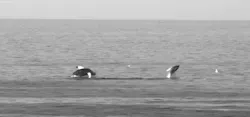
For cargo ships ferrying goods between continents, it can be nearly impossible to see ocean inhabitants until it’s too late. In fact, collisions with these enormous ships are the leading cause of death of large whales. This prompted a collaborative team to take action.
Scientists from WhaleSpotter, a spinoff from more than a decade of research at the Woods Hole Oceanographic Institution in Massachusetts, with assistance from imaging technology developer Teledyne FLIR OEM, designed a system to detect the presence of whales in virtually any type of weather conditions—including complete darkness and fog—and in real time (see video).
“Teledyne FLIR OEM is a key partner that shares our passion to protect marine mammals and support a safer ocean for future generations,” says Shawn Henry, CEO of WhaleSpotter. “We share the desire to combat rising whale strikes, which are the leading cause of death for large whales, including endangered species.”
Their system involves WhaleSpotter’s AI detection models combined with visual inputs based on years of whale observations. This is paired with Teledyne’s Boson+ longwave infrared thermal camera imaging module that touts extreme sensitivity and around-the-clock operation to allow mariners to operate safely day and night.
With the combined system, scientists can find and identify whales more accurately in low-thermal-contrast conditions typical of their operational environment. The setup also continuously scans the water, and the results are rapidly reviewed and verified. Ship crews are then alerted to marine mammals surfacing from as far away as seven kilometers (about four nautical miles), which provides ample time for ships and offshore operators to adjust their course and speed.
“Long range detections allow captains to take minor evasive maneuvers and successfully avoid whales,” says Henry. “The mission is centered on ‘detect, alert, avoid.’”
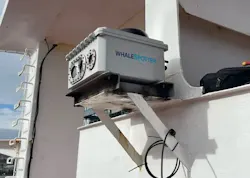
Right now, WhaleSpotter’s is the only proven system to avoid vessel-whale strikes in real-time day and night. Henry explains there are other protection measures, but they require constantly tracking the exact whereabouts of the whales and imposing slow zones, which is “economically challenging and not as effective.”
This new setup essentially ensures zero false positives, according to the WhaleSpotter team, and they’ve already shown it can reduce vessel strike risk by >90%.
“The ultimate goal is for humans and whales to coexist safely in the ocean,” says Henry, citing WhaleSpotter’s tagline: “See what lies ahead to protect what lives below.”
The team is now working to scale the deployment of their detection system so it and the data it produces can be used, directly or indirectly, on any vessel. They’re also exploring use of the system to detect and protect sea turtles and crocodiles.
About the Author
 Justine Murphy
Justine Murphy
Multimedia Director, Digital Infrastructure
Justine Murphy is the multimedia director for Endeavor Business Media's Digital Infrastructure Group. She is a multiple award-winning writer and editor with more 20 years of experience in newspaper publishing as well as public relations, marketing, and communications. For nearly 10 years, she has covered all facets of the optics and photonics industry as an editor, writer, web news anchor, and podcast host for an internationally reaching magazine publishing company. Her work has earned accolades from the New England Press Association as well as the SIIA/Jesse H. Neal Awards. She received a B.A. from the Massachusetts College of Liberal Arts.