• Home >
  • Back Issues >
  • Laser Focus World >
  • Volume 45, Issue 12
  • Volume 45, Issue 12

    More content from Volume 45, Issue 12

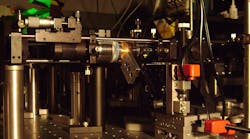
    (Courtesy of CSIRO Petroleum)
    Petroleum trapped in an inclusion in a quartz sample (left) is freed by ultrafast-laser ablation (right). A scanning-electron-microscope image (bottom) shows the extraction crater drilled into the quartz.
    Because amber sometimes has inclusions of organic compounds (sometimes in the form of insects), the substance has been invaluable to paleontologists.
    Dec. 1, 2009
    Sergii Yakunin and Johannes Heitz of Johannes Kepler University Linz (Linz, Austria) have developed a new way of microgrinding the tips of optical fibers to produce spherical ...
    Dec. 1, 2009
    Courtesy of SunPower
    FIGURE 1. A generic solar cell has multiple loss mechanisms (losses shown are a percentage of the incident radiation). This device exhibits an efficiency of 14% to 15% and was the mainstay of the solar industry for several years.
    Though their methodologies and competitive strategies differ–SunPower focuses on high conversion efficiency, while Suntech focuses on lower cost–these two companies are threatening...
    Dec. 1, 2009
    FIGURE 1. Diode pumping of a dual-clad fiber laser can be from the end or the side, but light must enter at an angle close to the axis of the fiber so the pump light (blue) can be guided within the outer core. The laser species is doped into the inner core (red), which confines laser emission.
    With single-mode powers reaching 10 kW, and multimode powers to 50 kW, fiber lasers are going beyond industrial applications to become candidates for battlefield deployment as...
    Dec. 1, 2009
    (Courtesy of UCLA)
    FIGURE 1. Among the breakthrough technologies to be presented at Photonics West 2010, a new imaging platform developed at UCLA identifies microparticles toward disease diagnosis and monitoring, as well as water-quality testing, and sends the information wirelessly for real-time monitoring.
    Hailed as North America’s largest international photonics conference, SPIE’s Photonics West 2010 is so big, it had to be moved from San Jose to San Francisco’s Moscone Convention...
    Dec. 1, 2009
    (Courtesy of the European Southern Observatory)
    The power and conversion efficiency of a 589 nm guide-star fiber laser are plotted as a function of the power from its 1178 nm single optical amplifier.
    A typical laser guide star–formed by illuminating the upper atmosphere with 589 nm light to cause sodium vapor lines to fluoresce–accompanies an adaptive-optics system to compensate...
    Dec. 1, 2009
    FIGURE 1. A shadow-cast image of a monarch butterfly (top; original in inset) illuminated at 1310 nm shows fine features, such as the limbs and the antennae. The imager (upper inset) has a resolution of 256 x 256 pixels with a pixel pitch of 154 µm. Cut-off frequencies of the diodes are shown in the Bode diagram (bottom). The inset at bottom shows a snapshot taken from a movie of two woodlice (armadillidium vulgare) illuminated at a wavelength of 1310 nm) [2].
    A combination of organic and inorganic nanoscale materials, along with solution processing, enables a tunable imager for short-wave infrared imaging.
    Dec. 1, 2009
    (Courtesy of The University Centre in Svalbard)
    Data processed from two DSLR color cameras viewing a variable monochromatic uniform illumination source from an integrating sphere reveals the spectral responsivity (upper) and quantum efficiency (lower) for each color channel of the cameras (red, green, and blue).
    A collaborative effort by researchers in several countries has resulted in a new optical method to measure the sensitivity and quantum efficiency of each pixel in color digital...
    Dec. 1, 2009
    An optical metamaterial with a “fishnet” structure achieved a negative refractive index at the shortest wavelength so far–580 nm, or in the yellow region.
    For the first time, researchers have created a negative-refractive-index optical metamaterial that operates in the yellow portion of the visible spectrum (580 nm).
    Dec. 1, 2009
    (Courtesy of Wei Min and Sijia Lu)
    A stimulated-emission image of microcapillaries of a mouse ear based on endogenous hemoglobin contrast (in red color) shows individual blood cells in the vessel network surrounding sebaceous glands (green overlay based on confocal reflectance).
    Biological imaging may be revolutionized with the advent of a new spectroscopic method to complement fluorescent imaging–and it relies on the fact that many nonfluorescent molecules...
    Dec. 1, 2009
    (Courtesy of Damian Wallace, Max Planck Instiute for Biological Cybernetics)
    A miniature two-photon microscope is small enough to be mounted on a lb rat without restricting the animal's activities.
    Observing neural activity in the mammalian brain with multiphoton microscopy allows researchers not only to locate individual active neurons, but also to see how groups of neurons...
    Dec. 1, 2009
    (Courtesy of the University of Texas at Austin)
    FIGURE 1. Diffraction gratings 40 × 80 cm in size compress a high-energy laser pulse from a few nanoseconds to 167 fs. The diffraction gratings are some of the largest in the world.
    The quantity and quality of innovation in photonics this past year was enormous, with many interesting achievements among the less publicized.
    Dec. 1, 2009
    Nancy Magnani of EASTCONN and Judy Donnelly of Three Rivers Community College in Norwich, CT, are among OSA Foundation grant recipients whose creative programs are designed to...
    Dec. 1, 2009
    Th Ppo 1109 01
    For the latest in new products, see Photonics Products Online on our home page and at www.laserfocusworld.com/exclusives/highlights.html
    Dec. 1, 2009
    (Courtesy of NIST)
    A microscope apparatus is being used at NIST to understand differences between near-resonance and far-from-resonance trapping and tweezing of particles. The study could improve the prospects for near-resonant trapping at lower power levels, to limit damage to biological specimens.
    The two forces associated with optical trapping are the scattering force in the direction of beam propagation and the gradient force in the direction of the gradient of light ...
    Dec. 1, 2009
    Th Manu 1109 01
    Manlight, a leading company in fiber amplifiers and lasers, has launched its 30W version of 1µm Ytterbium doped fiber laser for industrial applications such as marking and deep...
    Dec. 1, 2009
    Economically speaking, this past year is one that most people would probably prefer to put firmly behind them, while looking forward with wary optimism to a gradual recovery in...
    Dec. 1, 2009
    This is in reference to the article “SRS microscopy maps distribution of lipids, drugs” by Barbara Goode (April 2009, p.24).
    Dec. 1, 2009
    1304qa Chang New
    Q: I hold a responsible business development position in a semiconductor inspection company.
    Dec. 1, 2009
    In my view, Kao’s work has had such a significant worldwide impact that Kao truly deserves a whole Nobel for himself.
    Dec. 1, 2009
    Th Np 1109 01
    The Ergonomic Low-Profile-Format (ELpF) vibration-isolation platform can be easily moved on the benchtop, even with a load and in float, without damage to the vibration isolators...
    Dec. 1, 2009