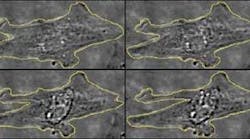
While nonoptical medical imaging techniques such as computed tomography, magnetic-resonance imaging, and ultrasound can be very useful in guiding surgical procedures, they lack...
Near-infrared hyperspectral imaging is important to semiconductor-device research; integrating an InGaAs image sensor with hyperspectral microscopy provides data to a level of...
Aug. 1, 2008
(Courtesy of Max-Planck-Institut für Quantenoptik)
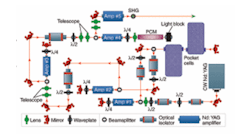
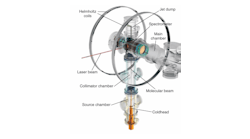
By carefully controlling the waveform of an ultrafast laser pulse and sending it through a jet of neon gas, briefly ionizing it, researchers at the Max-Planck-Institut für Quantenoptik...
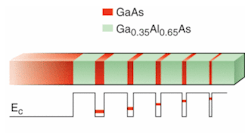
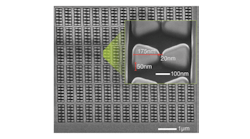
One promising avenue in the field of nanophotonics—confining and manipulating light on the nanometric scale—is the use of photonic crystals (PCs) in optical microcavities.
Strong coupling of a light wave with matter in microcavities creates unusual effects, including novel lasers—microlasers and polaritons—and strong nonlinearities.
While planar laser-induced-fluorescence (PLIF) imaging of aerodynamic and combustion flows has developed enormously since its inception in the early 1980s, the ability to directly...
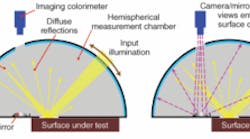
Imaging-sphere technology enables fast optical characterization of surfaces to produce quantitative, comprehensive evaluation that the human eye can’t.
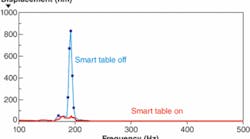
Optical tables and vibration isolation supports have become the de facto standard for providing a stable environment for complex laser systems and their applications.
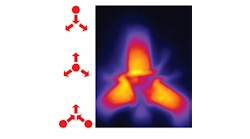
For the first time, scientists have reportedly manipulated exciton fluxes in tiny circuits using voltage as a control, an important step in the development of optically active...
Power-transmission tests of IR light through fiber-optic delivery systems show the viability of commercial-grade fluoride fiber for medical and dental applications.
Researchers at Argonne National Laboratory (Argonne, IL) and the University of California at Los Angeles (UCLA) are developing an x-ray free-electron laser (FEL) in an oscillator...
Researchers from the University of Arizona (U of A; Tucson, AZ) and the Jet Propulsion Laboratory (Pasadena, CA) have coupled an optical vortex coronagraph (OVC) to an 8-in.
Scientists have no problem generating immense data sets, but visualizing the data on a large scale is a challenge that requires a display system of equally immense resolution....
By announcing shipment of its ten-millionth chip, transceiver and components company Phyworks (Bristol, England), whose products cover 1 to 10 Gbit/s data rates for fiber-to-the...
Chances are that you have never heard of the man who turned acoustics into a true science although you almost certainly have listened to music that has benefited from his exemplary...
Anticipating the “green revolution,” Laser Focus World published in September 2006 a staff-written Special Report highlighting the role that photonics and optoelectronics can ...
Ultrafast Lasers2008, a new report from Strategies Unlimited (Mountain View, CA) forecasts that the ultrafast laser market will reach about $260 million in 2008 with healthy...
Laser Focus World (Nashua, NH) and the Optoelectronics Industry Development Association (OIDA; Washington, D.C.), a not-for-profit association that serves as the nexus for vision...
S.E.T. Smart Equipment Technology (Saint Jeoire, France), a supplier of die-to-die, die-to-wafer bonding and nanoimprint lithography solutions, installed a Kadett High Accuracy...
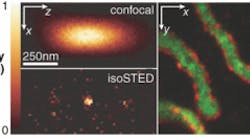
The imaging resolution of far-field fluorescence microscopy techniques is limited by the point-spread function (PSF) of the focal spot, which quantifies the blur of the object...
A research team at Osaka University in Japan has shown that cultured heart-muscle cells synchronize their contractions in response to pulses from a femtosecond laser.
Lasers are widely known for their use in industrial applications for cutting through metals, or for their potential as defensive weapons: they bring to mind powerful, visible,...
Because extreme-ultraviolet (EUV) radiation is so difficult to produce, any scientist or engineer who happens to come up with a good idea using EUV light is soon confronted with...
About a decade ago, Paul Corkum imagined a laser beam tearing an electron from a molecule and then driving the same electron back to the molecule to take its own picture.